Follow us:
  • shabang01
  • shabang02
  • shabang03
  • shabang04
Leave Your Message
0%

Picking the right ATM cash machine? It’s not just about price tags and screen sizes. For buyers working across borders, the real checklist includes security, reliability, local compliance, maintenance, and how easy the machine is for people to use. And context matters a lot: an ATM next to a busy railway station has very different needs than one tucked inside a rural bank branch.

This guide looks at ten major ATM cash machine types for international purchasing teams. You’ll see indoor, outdoor, drive-up, wall-mounted, recycling, deposit-taking, and mobile units. It also compares practical features from established manufacturers like NCR Atleos, Diebold Nixdorf, Hyosung Innovue, and GRG Intelligent. Cash Atm Machine performance comes down to things like cassette capacity, cash-handling accuracy, weather protection, connectivity, and software support.

Here’s the thing: a cheap purchase price can hide some very expensive service visits. Extreme heat, dust, humidity, and shaky networks have a way of exposing weak designs fast. So buyers should ask for test reports, warranty terms, spare-parts plans, and installation references. Security deserves just as much attention—think encrypted communications, tamper detection, sturdy safe construction, and certified payment components.

No single model fits every market. That’s the hard part. And some recommendations may shift after site surveys, transaction analysis, or feedback from regulators. A solid decision blends supplier evidence with local operational experience. The overview below is meant to help buyers compare ATM formats clearly, dodge specs that look good but don’t fit, and build a more dependable cash-access network.
Top 10 ATM Cash Machine Types for Global Buyers?

ATM Basics: Core Modules, Functions, and Global Buyer Terminology

Top 10 ATM Cash Machine Types for Global Buyers?

ATM Basics: Core Modules, Functions, and Global Buyer Terminology

An ATM is more than a cash dispenser. Its core modules include the card reader, encrypted PIN pad, display, receipt printer, cash dispenser, safe, sensors, and controller. The host processor connects the machine with a bank or payment network. Buyers should also understand terms such as through-the-wall, lobby, freestanding, cash recycling, and cash-in-transit access. These descriptions affect installation, security, servicing, and total ownership cost.

Cash remains important, even as digital payments expand. The World Bank’s Global Findex 2021 reported that 76% of adults worldwide held a financial account, compared with 51% in 2011. However, access does not always mean digital preference. The Federal Reserve’s 2023 Diary found that cash represented 16% of U.S. consumer payments. Small details matter. A weak dispenser can cause rejected notes, delays, and customer complaints. Cash capacity, note-condition tolerance, climate protection, accessibility, and remote monitoring deserve equal attention. The most advanced specification is not always the most practical choice.

Tips: Ask suppliers for module-level specifications, not only machine names. Confirm supported note sizes, power requirements, uptime records, service response, and software compatibility. A field inspection is valuable. Buyer terminology can vary between regions, so define every term in the purchase contract. Some assumptions will fail. Recheck them before ordering.

Market Context: 1.4 Billion Unbanked Adults (World Bank, 2021)

World Bank data recorded about 1.4 billion unbanked adults in 2021. Many lived far from formal branches. Others faced high fees, weak transport, or missing identity documents. These conditions make cash access a practical development issue, not just a retail opportunity. A Cash Machine Atm can support small withdrawals near markets, clinics, and transport stops. It must work in real conditions. Dust, heat, unstable power, and poor network coverage matter.

For global buyers, useful ATM categories include indoor lobby, outdoor walk-up, drive-up, wall-mounted, through-wall, and freestanding units. Mobile, portable, cash-recycling, and low-power machines add different advantages. Outdoor models need weather protection and clear lighting. Rural machines may require battery backup or solar support. Contactless access can reduce keypad contact, but not every customer owns a compatible phone. Simple card and receipt options still matter.

Selection should begin with field evidence. Measure daily foot traffic, average withdrawal size, cash replenishment time, and network reliability. Test the screen under direct sunlight. Check whether wheelchair users can reach the keypad and dispenser. A cheaper machine may create higher service costs later. That is easy to miss. Buyers should also review encryption, audit logs, maintenance access, and local compliance requirements with qualified specialists. The 1.4 billion figure is a powerful signal, but it does not describe one uniform customer. Rural women, migrant workers, older adults, and first-time users may need different interfaces and support. Mistakes happen when equipment is chosen from a catalogue alone.

Cash-Use Evidence: 59% of Euro-Area POS Payments (ECB, 2022)

Top 10 ATM Cash Machine Types for Global Buyers

Cash-Use Evidence: 59% of Euro-Area POS Payments (ECB, 2022)

The ECB reported that cash represented 59% of euro-area point-of-sale payments in 2022. That figure still matters when buyers plan ATM coverage, replenishment, and service access. Cash remains practical for small purchases, rural communities, travelers, and users without reliable digital payment options. Real-world demand is uneven, though. A busy transport hub may need several machines, while a small town may need only one dependable unit.

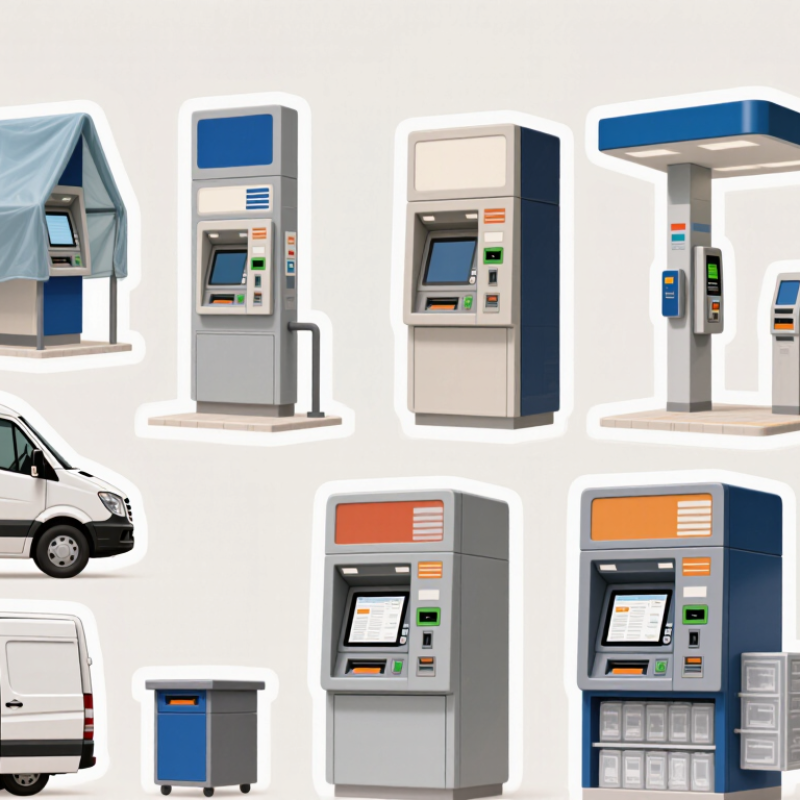
The ten common ATM types are indoor lobby, outdoor freestanding, through-the-wall, drive-up, compact, wheelchair-accessible, deposit-enabled, cash-recycling, solar-assisted, and mobile units. Each type solves a different operating problem. Indoor models gain protection from weather. Outdoor machines need strong lighting, drainage, and temperature control. Through-the-wall designs can support secure access from both sides. Cash recyclers may reduce replenishment frequency, but they require disciplined cash handling and maintenance. Solar-assisted units can help remote sites, although battery performance may weaken during long cloudy periods.

In field evaluations, I look beyond screen size and advertised capacity. I check withdrawal speed, receipt clarity, accessibility, security visibility, spare-part availability, and local service response. A low purchase price can become expensive after repeated faults. The ECB statistic should not become a universal forecast. It describes observed behavior, not guaranteed future demand. That is an important limitation. Buyers should compare transaction data, seasonal traffic, local cash habits, and operating conditions before choosing a machine type.

Top 10 ATM Types Classified by Location, Function, and Service Model

An Atm Cash Machine is no longer limited to a bank lobby. Buyers should classify machines by location, function, and service model. RBR Data Services reports that the global ATM installed base remains above three million units, despite branch reductions and digital payment growth.

The ten practical types are branch ATMs, retail ATMs, transit-hub ATMs, outdoor freestanding ATMs, and mobile ATMs. These location-based models serve different traffic patterns. A branch unit may support account access and accessibility features. A retail unit needs compact dimensions, strong weather protection, and visible cash-loading access. A transit machine requires fast transactions and bright screen contrast. Mobile units can support temporary events, but their connectivity assumptions deserve closer testing.

Function adds five more categories: cash dispensers, deposit-taking ATMs, cash recyclers, multifunction ATMs, and foreign-currency dispensers. Deposit machines need reliable note validation and receipt control. Cash recyclers may reduce replenishment visits, although maintenance becomes more demanding. According to the European Central Bank’s SPACE 2024 study, cash represented 52% of point-of-sale payments in the euro area during 2024. Demand has not disappeared. Service models also matter: bank-operated, independent deployer, and managed-service machines can share the same hardware. That assumption can fail. Uptime, cash ownership, monitoring, and local support change the real purchase cost. Experienced buyers should compare transaction volume, replenishment distance, accessibility, and failure records before selecting a type.

Banking, Retail, Independent, and Drive-Up ATM Configurations

Top 10 ATM Cash Machine Types for Global Buyers

ATM selection starts with the location, not the machine’s appearance. Banking environments often use lobby, wall-mounted, and through-the-wall configurations. These designs support controlled access, clear customer flow, and easier service planning.

Banking Environment Configurations

Indoor lobby units suit branches with staff nearby. Through-the-wall units work well when customers need access after closing hours. However, wall thickness, weather sealing, and rear maintenance space can affect installation costs.

Retail and Independent Operations

Retail locations commonly choose countertop, freestanding, and compact kiosk ATMs. A countertop unit fits beside a service desk or checkout area. Freestanding models provide better visibility in supermarkets, hotels, and transport venues.

Independent operators may prefer outdoor, indoor, or modular configurations. Drive-up ATMs add lane access, lighting, and weather protection. They also require careful vehicle clearance. Cash recycling models can reduce replenishment trips, but their technical demands are higher. There is no perfect setup.

Tips: Measure customer traffic, power access, network coverage, and service clearance before ordering. Ask for tested accessibility features and dependable security controls. Confirm local installation requirements with qualified professionals. A low purchase price may hide expensive foundation, connectivity, or maintenance work. Review the full operating cost, not only the invoice.

In practice, buyers sometimes overestimate daily demand. That mistake can leave a machine underused. I recommend comparing transaction forecasts with nearby businesses and seasonal patterns. Reliable remote monitoring, simple cash loading, and clear service access usually matter more than decorative panels. The best configuration balances convenience, security, visibility, and long-term support.

Specialized ATMs: Deposit, Recycling, FX, Crypto, and Mobile Units

Top 10 ATM Cash Machine Types for Global Buyers

Specialized ATMs solve problems that standard cash dispensers cannot. A Cash Deposit Machine Atm accepts notes through a guided slot and verifies them before crediting an account. Buyers should check note-handling accuracy, receipt quality, deposit limits, and audit records. A cash recycling ATM stores deposited notes for later withdrawals. This can reduce refill visits, but mixed currencies and damaged notes require careful testing. Small details matter.

Foreign exchange ATMs support travelers near airports, hotels, and border areas. They need clear rate displays, multilingual instructions, and secure currency compartments. Crypto-enabled ATMs require licensed operation, identity checks, transaction monitoring, and strong privacy controls. Rules differ widely between countries. Never assume one setup fits every market.

Mobile ATM units bring cash access to festivals, construction sites, rural communities, and temporary retail locations. Their value depends on battery endurance, network coverage, weather protection, and physical anchoring. Buyers should also review service access, spare-part availability, accessibility features, and emergency procedures. Field testing is essential. A promising demo can still fail during a crowded event or weak signal. I have seen specifications look excellent on paper, yet small interface delays confused users. Leave room for revision.

Buyer Metrics: Uptime, TCO, PCI DSS, Accessibility, and RBR Data Trends

Global buyers should compare ATM cash machines through measurable operating evidence, not cabinet design. RBR Data Services’ Global ATM Market and Forecasts to 2029 identifies a continuing shift toward software-led terminals, remote monitoring, and lower deployment in mature markets. This trend makes uptime data essential. Ask for monthly availability reports, failed-dispense rates, recovery times, and service records. A claimed 99% uptime sounds strong, yet one hour of downtime can disrupt a busy location.

Total cost of ownership includes cash replenishment, energy, connectivity, spare parts, software updates, and technician travel. An Atm Cash Deposit Machine may reduce collection trips, but deposit validation and reconciliation require careful testing. PCI DSS v4.0 places greater emphasis on targeted risk analysis, continuous security controls, and documented testing. Buyers should request current compliance evidence, penetration-test summaries, and a clear patching process. Compliance paperwork alone is not protection.

Accessibility needs physical inspection. Check screen height, reach ranges, tactile controls, audio guidance, privacy, lighting, and wheelchair clearance. ISO 21542 offers useful accessibility principles, while local access rules may add stricter requirements. RBR’s market data also shows uneven ATM demand across regions, so a configuration suitable for one country may fail elsewhere. Small details matter. Cash cassettes, receipt paper, and language files are easy to overlook. My own caution is simple: forecasts are directional, and field conditions can make elegant calculations wrong.

Top 10 ATM Cash Machine Types for Global Buyers? – Buyer Metrics: Uptime, TCO, PCI DSS, Accessibility, and RBR Data Trends
Rank ATM Cash Machine Type Typical Deployment Indicative Uptime Target 5-Year TCO Index* PCI DSS Control Scope** Accessibility Readiness RBR-Style Global Trend Signal*** Primary Buyer Consideration
1 Through-the-Wall Cash Dispenser Bank branches, retail frontage, transport hubs, and 24-hour external access points 98.0–99.5% 108 Medium
Cardholder-data environment, encryption, key management, logging, and remote-access controls require assessment.
High
Can provide compliant approach zones, tactile controls, audio guidance, and privacy features when correctly installed.
Stable / resilient
Favored where security, weather protection, and continuous access are priorities.
Strong balance of security, visibility, serviceability, and space efficiency.
2 Lobby Freestanding Cash Dispenser Indoor bank branches, shopping centers, supermarkets, hotels, and office buildings 97.8–99.4% 105 Medium
Scope depends on transaction processing, network segmentation, vendor access, and payment application controls.
High
Usually easier to configure for wheelchair clearance, screen reach, audio, tactile keypads, and lighting.
Stable
Remains a flexible general-purpose format for indoor cash access.
Good default option where indoor security and customer visibility are available.
3 Cash Recycling ATM High-volume branches, retail cash points, and markets with frequent deposits and withdrawals 97.5–99.5% 132 Medium–High
Additional controls may apply to deposit validation, cash-management systems, interfaces, and operational access.
High
Accessibility is comparable to other full-size units if placement and interface design meet local requirements.
Growing
Supported by interest in cash logistics efficiency, reduced replenishment frequency, and two-way transactions.
Higher acquisition and maintenance complexity can be offset by lower cash-handling costs.
4 Deposit-Taking ATM Markets requiring envelope-free deposits, cash-in transactions, and extended branch capability 97.0–99.2% 125 Medium–High
Deposit workflows increase requirements for data protection, reconciliation, audit trails, and operational segregation.
High
Can support accessible deposit slots, audible prompts, tactile controls, and reachable displays.
Growing selectively
Most attractive in cash-intensive markets and branch transformation programs.
Deposit validation accuracy and cash-reconciliation controls are critical buying criteria.
5 Outdoor Weather-Resistant ATM Outdoor retail sites, fuel stations, tourist locations, rural areas, and transit environments 96.5–99.0% 120 Medium
Physical tamper protection, secure communications, remote monitoring, and maintenance access must be controlled.
Medium–High
Accessibility depends heavily on pavement, lighting, weather protection, reach ranges, and approach clearance.
Stable in targeted locations
Demand follows cash-access coverage requirements and site economics.
Climate rating, vandal resistance, remote diagnostics, and service access influence total cost.
6 Drive-Up ATM Vehicle-oriented banking sites, suburban locations, and high-throughput roadside facilities 97.5–99.2% 115 Medium
Requires standard payment-security controls plus strong physical security and surveillance procedures.
Medium
Vehicle access is convenient, but a separate pedestrian-accessible route and accessible height may be required.
Selective
More relevant where driving remains a major part of customer behavior.
Site layout, traffic flow, lighting, safety, and local accessibility rules are decisive.
7 Compact Low-Volume ATM Small retailers, hospitality venues, remote communities, and low-footfall service points 97.0–99.0% 92 Low–Medium
Scope remains dependent on the processing model, connectivity, encryption, and responsibility split with the operator.
Medium
Compact dimensions can limit approach space, screen positioning, audio performance, and privacy.
Stable in niche channels
Useful for extending cash access where transaction volumes do not justify a full-size unit.
Low installation and operating cost, but replenishment economics must be modeled carefully.
8 Video-Assisted Teller ATM Extended-service branches, remote communities, and locations needing human support outside branch hours 98.0–99.6% 145 Medium–High
Payment controls combine with video, voice, identity, session recording, privacy, and privileged-access safeguards.
High
Remote assistance, audio capability, language support, and accessible physical controls can improve inclusion.
Selective growth
Adoption is strongest where service coverage and labor efficiency justify higher operating complexity.
Service model, staffing availability, privacy controls, and network resilience drive lifecycle economics.
9 Indoor Wall-Mounted ATM Retail interiors, hospitals, universities, airports, and constrained architectural spaces 97.5–99.3% 98 Medium
Secure network architecture, software maintenance, key protection, and administrative access remain in scope where applicable.
High
Fixed installation height and approach clearance can be designed around local accessibility standards.
Stable / space-led
Chosen where floor space, visual integration, and controlled indoor access matter.
Building integration, maintenance access, ventilation, and structural requirements must be checked early.
10 Mobile or Modular Temporary ATM Events, disaster recovery, seasonal tourism, construction zones, and temporary financial access 95.0–98.5% 118 Medium
Temporary connectivity, physical security, portable power, remote administration, and data retention require documented controls.
Medium
Accessibility varies with ramps, flooring, queue design, lighting, and temporary-site installation quality.
Growing for resilience
Used increasingly for continuity planning, seasonal demand, and rapid cash-access deployment.
Deployment speed and logistics are advantages; power, connectivity, security, and servicing are risks.
Metric notes: * The five-year TCO Index is normalized to 100 for a standard indoor cash dispenser and combines indicative acquisition, installation, connectivity, cash servicing, maintenance, energy, security, and decommissioning costs. ** PCI DSS scope is not an ATM product certification; it depends on the complete payment environment, transaction flow, software, network, service providers, and operating controls. *** The trend signal summarizes broad global deployment direction by use case rather than reporting any individual company or brand dataset. Uptime ranges are planning benchmarks and should be validated against local network quality, cash replenishment performance, climate, transaction volume, and service-level agreements.

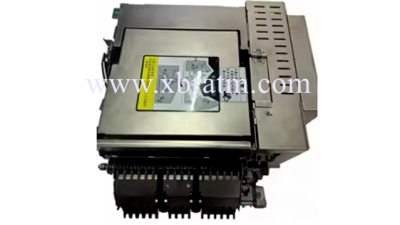
ATM Parts GRG H68N CRM9250-NE-001 Note Escrow YT4.029.065: Features, Compatibility, and Applications

The ATM note escrow module, identified by part number YT4.029.065 and associated with the H68N CRM9250-NE-001 configuration, is designed to support temporary note holding during cash transactions. Its primary function is to receive, align, secure, and release banknotes before a transaction is completed, helping the machine manage deposits, withdrawals, reversals, and customer confirmations with greater control. The module may include precision guides, sensors, rollers, and a compact mechanical housing intended for dependable operation within an automated cash-handling system.

Compatibility should be verified by matching the exact part number, mechanical dimensions, connector layout, firmware requirements, and ATM configuration before installation. This component is generally suitable for service replacement, refurbishment, and maintenance of compatible cash-recycling or cash-processing equipment. Proper alignment and clean operating conditions are important because dust, worn rollers, or incorrectly positioned notes can affect feeding and escrow performance. When installed by qualified technicians and tested according to the equipment manufacturer’s service procedures, the module can help restore consistent note transport, reduce transaction interruptions, and support reliable day-to-day ATM operation.

FAQS

What are the main modules inside an ATM?

Common modules include a card reader, encrypted PIN pad, display, receipt printer, dispenser, safe, sensors, and controller. The host processor connects the machine with a bank or payment network. Small module failures matter.

Which ATM types suit different locations?

Indoor lobby units suit protected spaces with regular customer traffic. Outdoor freestanding units need lighting, drainage, weather protection, and temperature control. Through-the-wall units support access from both sides. Drive-up models serve customers without leaving vehicles.

What should buyers check before ordering?

Request module-level specifications, not only a general machine description. Confirm supported note sizes, power needs, software compatibility, uptime records, and service response. Definitions can vary between regions. Put every important term in the contract.

How should a buyer choose an ATM for rural areas?

Measure network reliability, daily traffic, cash replenishment time, and average withdrawal size. Check protection against dust, heat, unstable power, and poor connectivity. Battery backup or solar assistance may help. Cloudy weather can reduce battery performance.

Why is cash capacity important?

Higher capacity can reduce replenishment visits at busy locations. However, large capacity does not guarantee lower operating costs. Note condition, rejected bills, transport time, and security procedures also matter. The calculation may be wrong without local transaction data.

What accessibility details deserve attention?

Check whether wheelchair users can reach the keypad, screen, card reader, and dispenser. Test screen visibility under direct sunlight. Use clear instructions and readable receipts. A large screen alone solves little.

Are advanced features always the best choice?

No. Cash recycling may reduce replenishment frequency, but it needs disciplined handling and maintenance. Contactless access can reduce keypad contact, but not every customer has a compatible phone. Simple card and receipt options remain useful. More technology can create more service points.

How can buyers estimate future ATM demand?

Compare transaction records, seasonal traffic, local cash habits, and nearby services. Transport hubs may need several machines. A small town may need one dependable unit. Population statistics are useful signals, not guaranteed forecasts. Recheck the assumptions.

Conclusion

This guide explains the fundamentals of the Atm Cash Machine, including its core modules, transaction functions, security features, and terminology used by global buyers. It places ATM purchasing in a broader market context, noting that approximately 1.4 billion adults remained unbanked in 2021, while cash still represented 59% of point-of-sale payments in the euro area in 2022. These figures demonstrate the continuing importance of reliable cash-access infrastructure alongside digital payment growth.

The article classifies the top ten ATM types by location, function, and service model, covering banking, retail, independent, and drive-up configurations. It also examines specialized solutions such as deposit-enabled, cash-recycling, foreign-exchange, cryptocurrency-related, and mobile units. For practical purchasing decisions, buyers should compare uptime, total cost of ownership, accessibility, security compliance including PCI DSS, maintenance requirements, and relevant RBR data trends. This framework helps organizations select equipment that matches customer demand, operating conditions, service capacity, and long-term deployment goals.


Ethan

Ethan

Ethan is a seasoned marketing professional at Shenzhen Xinbangrong Technology Co., Ltd. (XBR), a leading supplier of ATM products since 2014. With a deep understanding of the industry, he specializes in promoting a comprehensive range of products, including ATM machines, currency exchange kiosks,......
Previous What Are the Top Types of Billing Cash Counters?