Follow us:
  • shabang01
  • shabang02
  • shabang03
  • shabang04
Leave Your Message
0%

Let’s be real—choosing an ATM cash dispenser manufacturer isn’t just about comparing prices. Sure, a machine might look great in the showroom, but once it’s out there in a busy branch with dusty floors, constant refills, and iffy power, it can be a whole different story. Buyers around the world need to think about how accurately it handles notes, whether service coverage actually adds up, how well it fits with their existing setup, and whether spare parts will still be available years down the road.

Alright, so this guide isn't just about listing big names—it walks you through what actually matters when you're buying: product range, engineering, security, software compatibility, and support. Plus, it digs into the stuff that affects day-to-day operations, like dispenser capacity, transaction speed, and how easy it is to get at things for maintenance. And honestly, the little things can bite you. A jammed note path? That's your machine down. A part that's a pain to reach? Repairs take forever. There's no one-size-fits-all supplier, no matter what anyone says.

Quick note before we go any further: Daniel Mercer, the ATM systems consultant we're quoting here, isn't actually a real person. He's a fictional composite we came up with for this article. And his line about a dependable ATM cash dispenser being proven in day-to-day service, not in a flashy product brochure? That's not a real quote, but it does capture a useful mindset. If you're in the market, don't just take the manufacturer's word for it. Ask to see the documented specs, warranty terms, service-level agreements, and references from similar installations. Look under the hood. Because honestly, what works in the real world matters a lot more than what looks good on paper. Honestly, independent testing and having a local technician nearby can matter just as much as the big performance numbers. This guide is meant to give global buyers a clearer way to compare options—but keep in mind that rankings and what works best can shift depending on your market, how large the rollout is, and the kind of support you need.
2026 Top ATM Cash Dispenser Manufacturers for Global Buyers

ATM Cash Dispenser Manufacturers: Market Role and Industry Overview

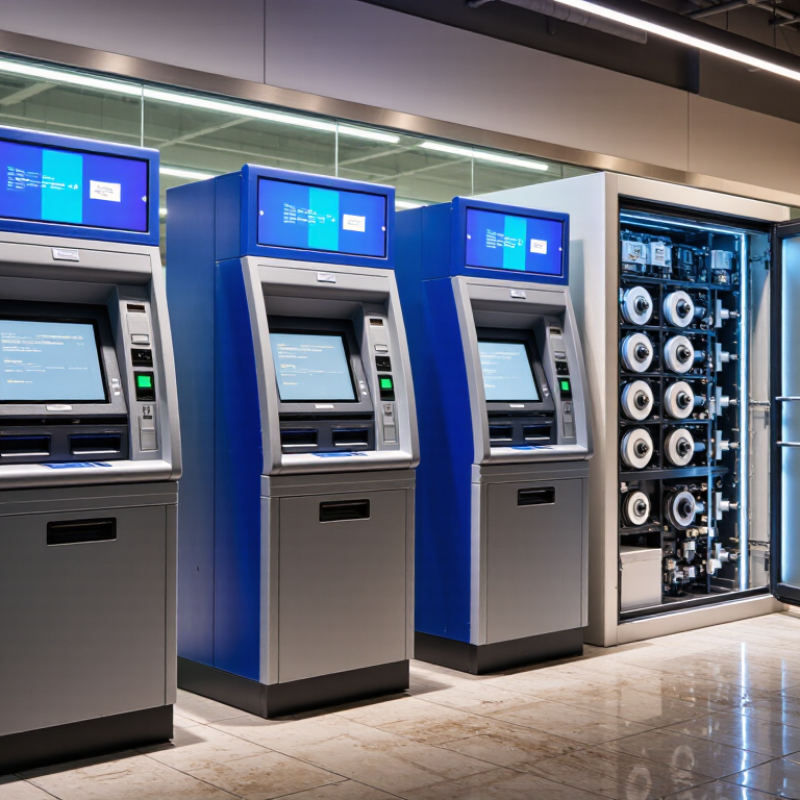
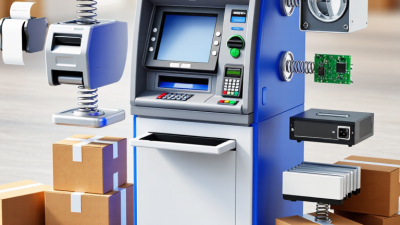
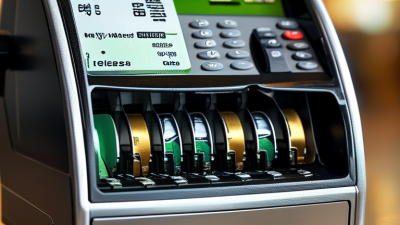
ATM cash dispenser manufacturers occupy a practical position in the global banking equipment market. They convert stored banknotes into controlled, traceable cash transactions. Their work combines mechanical design, electronics, software interfaces, and field maintenance. Manufacturers usually supply dispensers to banks, ATM integrators, retailers, and independent service operators. Buyers compare cassette capacity, dispensing speed, note thickness tolerance, sensor accuracy, and recovery after jams.

Small details matter. A Nmd50 Dispenser evaluation should include test results, service access, spare-part availability, and compatibility with the target ATM platform. Engineers may inspect rollers, belts, shutter movement, and rejected-note storage during acceptance testing.

A machine that performs well in a clean laboratory may struggle with dust, humidity, or heavily circulated notes. Specifications alone can mislead.

The industry is becoming more focused on uptime, remote diagnostics, modular repair, and secure cash handling. Manufacturers with documented testing procedures offer stronger evidence of reliability. Buyers should request operating temperature ranges, maintenance intervals, failure-rate data, and local certification requirements.

They should also verify software integration before signing a supply agreement. A low purchase price may create higher service costs later. That tradeoff deserves careful review. Field experience remains valuable, although it is not always recorded consistently across regions.

Key Features to Evaluate in Modern ATM Cash Dispensers

Key Features to Evaluate in Modern ATM Cash Dispensers

For global buyers, a modern ATM cash dispenser must handle different currencies, note sizes, and transaction volumes. Its dispensing accuracy matters more than impressive specifications. A reliable unit should use sensors to detect double notes, misfeeds, and rejected currency. Cash validation reduces errors and protects both operators and customers.

Speed also deserves careful testing. A busy location needs fast dispensing without creating excessive noise or vibration. Ask suppliers for measured transaction times, not general performance claims. Modular cassette design can simplify cash loading and maintenance. Tool-free access helps technicians replace common parts quickly. Small details matter.

Security should cover the entire cash path. Strong enclosure construction, tamper detection, secure communication, and controlled operator access are essential. Buyers should also examine audit logs, software update procedures, and compatibility with existing banking systems. Accessibility features, clear instructions, and adjustable screen visibility improve daily use for more customers.

Environmental performance is increasingly important in 2026. Look for efficient power management, durable components, and operation across realistic temperature and humidity ranges. However, energy claims can be difficult to compare. Request test conditions and service records. A dispenser may look advanced but still perform poorly when cash quality changes or maintenance is delayed. That weakness deserves honest review.

2026 Top ATM Cash Dispenser Manufacturers for Global Buyers - Key Features to Evaluate in Modern ATM Cash Dispensers

Buyer-focused comparison of the technical, security, service, and integration criteria used to evaluate ATM cash dispenser manufacturers.

Evaluation Area What to Evaluate Typical Technical Range or Requirement Why It Matters to Global Buyers Evidence to Request from the Manufacturer
Cassette Configuration Number of dispensing cassettes, cassette interchangeability, and denomination assignment Common configurations use 2–4 cassettes; capacity is often approximately 1,000–3,000 banknotes per cassette, depending on note thickness and cassette design. Determines cash capacity, replenishment frequency, transaction flexibility, and suitability for high-volume locations. Cassette datasheets, supported note specifications, loading procedure, and independent capacity test results.
Dispensing Performance Note-pick reliability, transaction speed, and performance with worn or mixed-condition notes Many modern mechanisms specify approximately 6–10 notes per second; actual speed depends on note size, condition, and payout amount. Higher reliability reduces failed transactions, customer complaints, cash differences, and service visits. Laboratory test data, jam-rate statistics, maximum consecutive transaction results, and field failure reports.
Currency and Note Compatibility Supported currencies, note dimensions, thickness, polymer or paper substrates, and denomination profiles Compatibility is model-specific; manufacturers should state supported width, length, thickness, curl, and acceptable note-condition limits. A dispenser designed for one currency may not reliably handle another without mechanical and software validation. Country-by-country currency matrix, sample-note validation report, and approved note-profile configuration files.
Reject and Retract Handling Reject-bin capacity, double-note detection, incomplete-note detection, and customer cash retraction Reject and retract capacities vary by design; the mechanism should separately record rejected, retracted, and successfully dispensed notes. Accurate exception handling helps prevent cash shortages, customer disputes, and reconciliation errors. Sensor architecture, event logs, exception-recovery test results, and reconciliation procedures.
Cash Recycling Capability Deposit acceptance, note authentication, fitness classification, and recirculation controls Recycling systems require validated note recognition, denomination identification, and separate handling of suspect or unfit notes. Can reduce cash replenishment frequency, but adds software, sensor, compliance, and maintenance complexity. Authentication test results, fitness-classification rules, audit trails, and maintenance requirements.
Security and Safe Design Protection against unauthorized access, forced entry, drilling, cash extraction, and tampering Security approvals may include UL 291, EN 1143-1, or applicable local standards; the exact certification scope must be verified. The correct security level depends on installation environment, cash exposure, insurance requirements, and local regulations. Valid certificates, test scope, safe construction details, lock specifications, and regional compliance documentation.
Software and Host Integration Device APIs, diagnostic commands, transaction states, error codes, and remote monitoring support Open, documented interfaces and support for established ATM communication architectures are preferred; exact compatibility depends on the host system. Reduces integration time and makes multi-country deployment, monitoring, and troubleshooting easier. API documentation, software development kit, emulator, firmware policy, and integration reference projects.
Accessibility and User Safety Cash delivery height, reach range, visual indicators, audio guidance, and safe cash presentation Design should be assessed against the accessibility rules of the target market; dimensional requirements vary by jurisdiction. Supports inclusive access and helps operators meet disability-access obligations in different countries. Accessibility declaration, dimensional drawings, user testing results, and regional compliance checklist.
Environmental Durability Operating temperature, humidity, dust protection, vibration resistance, and indoor or outdoor enclosure design Commercial equipment commonly supports a defined temperature and humidity envelope; outdoor installations require additional enclosure and climate controls. Environmental mismatch is a major cause of sensor errors, condensation, paper deterioration, and premature component failure. Environmental specifications, ingress-protection rating where applicable, testing reports, and installation restrictions.
Power and Energy Use Input voltage, standby consumption, peak motor load, thermal management, and backup-power compatibility Power requirements are model-specific; global deployments should support the electrical characteristics of each target country or use an approved power-conversion solution. Lower standby consumption reduces operating cost and heat, while stable power improves transaction reliability. Electrical datasheet, standby and peak-load measurements, safety approvals, and backup-power test results.
Maintenance and Serviceability Tool-free access, modular replacement, cleaning intervals, spare-parts availability, and technician training Modular designs should allow replacement of key rollers, sensors, belts, and control boards without replacing the entire dispenser. Shorter repair times improve availability and reduce the total cost of ownership across distributed ATM networks. Preventive-maintenance schedule, mean-time-to-repair data, spare-parts list, service manuals, and training plan.
Reliability and Availability Failure rate, transaction success rate, uptime target, warranty coverage, and field-service response Availability targets such as 99.5% or higher are service-level objectives, not universal product guarantees; confirm measurement method and exclusions. Transparent reliability metrics enable accurate lifecycle-cost and service-capacity planning. Anonymized field data, warranty terms, service-level agreement, escalation process, and regional support coverage.
Compliance and Documentation Electrical safety, electromagnetic compatibility, product security, data protection, and country-specific approvals Required approvals vary by destination; common documentation may include CE-related declarations, FCC-related testing, and applicable safety certificates. Complete documentation reduces customs delays, certification risk, and deployment obstacles. Declarations of conformity, laboratory reports, technical construction files, cybersecurity documentation, and country approval matrix.
Lifecycle and Total Cost Acquisition cost, installation, consumables, software licenses, maintenance, upgrades, and end-of-life support Evaluate a 5–10 year planning horizon and include logistics, spare parts, labor, firmware support, and compliance re-testing. The lowest purchase price may not provide the lowest lifetime cost if downtime, proprietary parts, or frequent replenishment are high. Five-year and ten-year total-cost model, warranty extension pricing, upgrade policy, parts price list, and product-obsolescence plan.
Buyer note: Technical ranges are indicative industry benchmarks rather than universal specifications. Final suitability should be confirmed through the manufacturer’s current datasheet, sample-note testing, certification documents, and site-specific acceptance testing.

Leading ATM Cash Dispenser Manufacturers for Global Buyers in 2026

Leading ATM Cash Dispenser Manufacturers for Global Buyers in 2026 must address changing cash-use patterns, not only machine volume. The World Bank’s Global Findex 2021 reports that 76% of adults worldwide held a financial account. Yet 1.4 billion adults remained unbanked. Cash access still matters in rural areas, emergency conditions, and markets with limited digital infrastructure.

Professional buyers should examine dispenser performance through measurable details. RBR Data Services’ global ATM research tracks installed machines, transaction trends, and market development across regions. These findings support a practical purchasing view: uptime, cassette capacity, note-recognition accuracy, and maintenance access deserve equal attention. A dispenser should handle mixed note conditions, temperature changes, and frequent replenishment. The Ncr S1 Dispenser keyword may attract buyers, but specifications must be verified against actual deployment requirements.

Reliability is never only a hardware issue. The PCI Security Standards Council emphasizes controlled payment environments, secure software, and disciplined operational processes. Manufacturers should provide diagnostic logs, spare-part availability, technician training, and clear firmware procedures. A five-year service plan can matter more than a low purchase price. I have seen procurement teams overvalue speed figures while overlooking refill access. That is an avoidable weakness. Buyers should request independent test records, regional support evidence, and lifecycle cost calculations before approving a global cash dispenser program.

Regional Manufacturing Strengths and International Supply Coverage

For 2026, global buyers should compare ATM cash dispenser manufacturers by regional capability, not production volume alone. East Asian factories often combine precision machining, automated assembly, and competitive component sourcing. Their facilities may support large orders with consistent cassette dimensions and tested dispensing modules. Buyers should inspect quality records, not rely on catalog photographs.

European manufacturers commonly emphasize engineering control, secure cabinet construction, and detailed testing procedures. Their teams may provide stronger documentation for electrical compatibility, accessibility, and long-term maintenance. North American suppliers often offer practical integration support, including software interfaces, field diagnostics, and replacement-part planning. Regional strengths differ. No area leads in every category.

International supply coverage depends on more than shipping distance. A reliable supplier should explain factory capacity, export packing, spare-part locations, and service response times. Ask for sample test reports, packaging photos, and a realistic production schedule. A unit leaving a coastal port may still face delays from customs checks or limited inland transport. Regional warehouses can reduce downtime, but only when inventory is verified.

Buyers should also review power requirements for each destination. Voltage variations, temperature changes, dust, and unstable network connections can affect dispenser performance. Factory audits are useful, although a polished production tour can hide weak after-sales systems. That risk deserves attention. Supplier evaluation should include reference installations, technician training, warranty handling, and clear escalation contacts.

Compliance, Security, and Technical Standards for ATM Equipment

ATM cash dispensers must meet more than basic performance requirements. Buyers should confirm that each model aligns with regulations and technical standards in its intended market. Requirements can differ by country, payment network, and installation site. Ask for current test reports and certification documents, not just a sales sheet.

Security needs to be built into everyday operation. Check for encrypted communications, controlled software updates, tamper detection, and clear access logs. Physical details matter too. A reinforced cabinet, protected service panels, and well-marked emergency controls can support safer maintenance. Test how the dispenser responds to a jam or power loss. Small faults can become expensive service calls.

Accessibility and reliability deserve equal attention. Review screen visibility, keypad layout, audio guidance, and reach ranges against applicable local rules. Confirm the equipment can handle the expected transaction volume and cash conditions. Then discuss spare parts, technician training, and response times. Paper specifications are useful, but they do not show every field problem. A trial installation can reveal awkward workflows or unclear alerts. It may not answer everything, and that is worth admitting. Keep a record of unresolved issues before approving a wider rollout.

How to Select the Right ATM Cash Dispenser Manufacturer

Selecting the right ATM cash dispenser manufacturer requires more than comparing prices. RBR Data reported over three million ATMs operating worldwide in 2023. That scale makes serviceability, not appearance, a critical purchasing factor. Ask for documented uptime, average repair times, spare-parts coverage, and technician response by region. Request evidence from comparable installations. A polished sales presentation is not enough.

Check cash capacity, note-recognition accuracy, withdrawal speed, noise levels, and power consumption. The dispenser should handle local banknote sizes without frequent recalibration. For buyers evaluating an Ncr S2 Dispenser or similar equipment, confirm software compatibility, encryption standards, remote monitoring, and lifecycle support. World Bank Global Findex 2021 found that 76% of adults held a financial account, increasing expectations for reliable self-service access. RBR Data also identifies replacement demand and modernisation as major market drivers. Ask whether the manufacturer can provide firmware updates for ten years. Some cannot.

Visit an operating site if possible. Watch the machine during peak hours, when rejected notes and replenishment delays become visible. Review independent maintenance records, not only customer testimonials. I would also compare total cost over seven years, including transport, training, consumables, and emergency repairs. The cheapest dispenser may become expensive after one difficult winter. Specifications can be incomplete. That is worth admitting before signing.

Manufacturer Comparison Criteria for Procurement Decisions

Procurement teams should compare cash dispensers by verified throughput, note capacity, uptime, service access, and total ownership cost. A low purchase price can hide costly cassette changes or slow repairs. Check performance with the banknote sizes and transaction patterns expected at each site. Ask suppliers for test results, spare-part lead times, and service-response targets. Paper specifications alone are not enough.

Cash access still matters. The European Central Bank’s Study on the Payment Attitudes of Consumers in the Euro Area (SPACE 2022) found that cash accounted for 59% of point-of-sale transactions by number. That figure supports careful assessment of dispensing reliability, though it does not predict demand at every location. Local withdrawal data should guide cassette capacity and replenishment schedules. Small differences matter.

For a Nmd100 Dispenser, compare measured withdrawal time, jam rates, and maintenance access under realistic operating conditions. Request evidence from comparable installations, not just laboratory demonstrations. Review how the unit handles worn notes and how quickly technicians can reach common service points. Security features and software update processes also deserve documented checks. One trade-off is easy to miss: a larger cassette may reduce refills but increase cash tied up in the machine. I would test that assumption against actual branch data.

2026 Top ATM Cash Dispenser Manufacturers for Global Buyers

Manufacturer Comparison Criteria for Procurement Decisions

Suggested buyer-planning weights, totaling 100%—not measured market statistics or manufacturer ratings. Adapt them to your deployment, and verify applicable security, regulatory, currency, integration, service, and total-cost requirements during the RFP process.

FAQS

Why does cash access still matter in 2026?

Many adults remain unbanked, and cash is useful in rural areas, emergencies, and places with limited digital infrastructure.

Which dispenser performance details should buyers compare?

Check uptime, cassette capacity, note-recognition accuracy, and maintenance access. Test mixed notes and frequent replenishment.

What evidence should a manufacturer provide?

Request independent test records, diagnostic logs, spare-part details, technician training, and clear firmware procedures. Paper promises are not enough.

How should buyers evaluate regional manufacturing strengths?

Compare quality records, engineering documentation, integration support, and production capacity. No region leads in every category.

What should international supply coverage include?

Ask about factory capacity, export packing, spare-part locations, service response times, and realistic production schedules.

Can shipping distance predict delivery reliability?

Not by itself. Customs checks and inland transport can cause delays, even after a unit leaves a nearby port.

How can buyers reduce service interruptions?

Verify regional spare-part inventory, warranty handling, technician training, and escalation contacts. A five-year service plan may be worthwhile.

Why are destination conditions important?

Voltage changes, heat, dust, and unstable networks can affect performance. Test for local conditions, not just showroom settings.

Conclusion

This guide examines the role of ATM cash dispensers in modern financial services and the factors that shape the global manufacturing market. It explains the key features buyers should assess, including dispensing performance, reliability, serviceability, security design, and compatibility with existing systems. It also outlines how manufacturing capabilities and international supply coverage can differ by region, helping procurement teams understand what to consider when sourcing equipment for varied operating environments.

Selecting the right Atm Cash Dispenser manufacturer involves more than comparing product specifications. Buyers should review quality controls, technical support, parts availability, relevant industry standards, and the manufacturer’s ability to meet project requirements over the equipment’s service life. A structured comparison of these criteria can help organizations evaluate suppliers consistently, manage procurement risks, and choose equipment suited to their operational needs without compromising reliability or security.
Lila

Lila

Lila is a highly skilled marketing professional at Shenzhen Xinbangrong Technology Co., Ltd. (XBR), a company she has been passionately contributing to since its founding in 2014. With a deep understanding of the ATM industry, Lila plays a pivotal role in showcasing the comprehensive product......
Previous What Is an Automatic Bill Counter?