Follow us:
  • shabang01
  • shabang02
  • shabang03
  • shabang04
Leave Your Message
0%

China’s ATM manufacturing scene is pretty impressive, blending precise engineering with large-scale production—and more and more, bringing in local supply chains. In this guide, I’ll walk you through the top 10 ATM component manufacturers in China, looking at what really matters in the industry. We’re talking about things like the reliability of parts, thorough testing, how well they can integrate their components, their experience with exporting, and how good their after-sales support is.

We cover all the critical parts—card readers, cash dispensers, receipt printers, encrypted keypads, screens, sensors, locks, and power modules. Here’s the thing: each of these tiny parts can make or break the uptime of an ATM. For example, a damaged shutter might shut down an entire machine, or a weak keypad could pose security risks. So, yeah, the small stuff really does matter.

Mike Lee, who used to be the head honcho of the ATM Industry Association, once said, “The ATM is the most secure electronic payment device in the world.” That statement really underscores how important security is for manufacturers. It’s not just about software; mechanical design, tamper resistance, firmware controls, and supply chain traceability all need to work hand in hand to keep things safe.

When I looked into these companies, I based my assessment on publicly available info, their manufacturing capabilities, product documentation, and how much experience they’ve got in the market. You’ll find a mix of big Chinese tech groups and niche component suppliers. But don’t forget—nothing is set in stone. A supplier that’s top-notch today might not be tomorrow if ownership changes, certifications lapse, or manufacturing shifts to a new location.

That’s why it’s worth paying attention to this kind of uncertainty.

Just because a factory sample looks great doesn’t always mean it’ll perform just as well in the real world over the long haul. If you’re thinking about buying, ask for test reports, warranty details, spare part policies, and compatibility info. Remember, this article is just a solid starting point—it’s not the final call. For banks, ATM operators, and integrators, doing your own careful checks is absolutely essential.
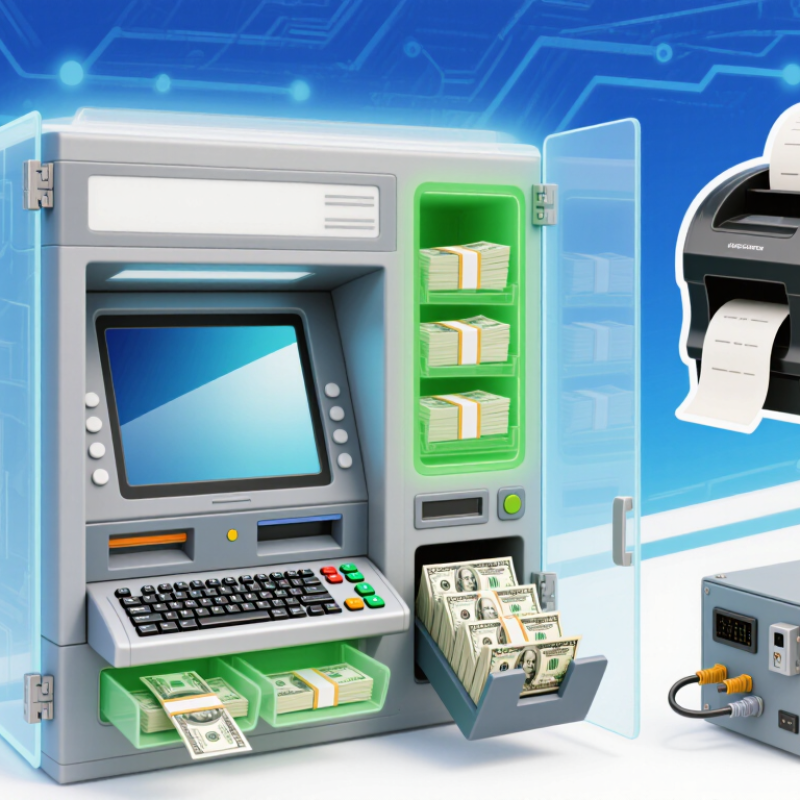
China Top 10 ATM Machine Components Manufacturers?

ATM Industry Scope: 3.1 Million Global ATMs in 2023 (RBR Data)

The global ATM installed base reached about 3.1 million machines in 2023, according to RBR Data. This scale creates steady demand for reliable components, not only complete machines. Manufacturers supply cash dispensers, card readers, encrypted keypads, receipt printers, displays, sensors, and security modules. Each part must perform consistently in dusty branches, busy retail areas, and outdoor kiosks.

Component quality directly affects uptime. A weak dispenser motor can delay cash delivery. A poorly calibrated sensor may trigger unnecessary service calls. Experienced operators often test parts through repeated dispensing cycles, temperature changes, vibration checks, and power interruptions. They also examine maintenance records, replacement speed, and technical documentation. Price matters, but it should not dominate the decision. Cheap components can become expensive after frequent field repairs.

The 3.1 million-machine base also creates a complex replacement market. Older terminals may need compatible parts rather than complete redesigns. Manufacturers with strong engineering teams can adapt interfaces, dimensions, and firmware requirements. Still, compatibility claims deserve careful verification. Technical mistakes happen. A supplier may provide impressive samples but weak after-sales support. Buyers should request test reports, traceability details, warranty terms, and realistic production capacity. Human inspection remains useful, even with automated quality controls.

China’s ATM Component Ecosystem: Modules, Standards, and Supply Chains

China’s ATM component ecosystem covers cash dispensers, card readers, receipt printers, keypads, displays, sensors, locks, and power modules. These Atm Machine Hardware Components are often produced through specialized regional supply chains. One factory may mold the enclosure, while another calibrates note sensors and transport belts.

When evaluating China’s top ten ATM component manufacturers, buyers should examine engineering depth rather than production volume alone. Reliable suppliers usually provide dimensional drawings, firmware records, incoming inspection data, and batch traceability. They should also understand EMV requirements, PCI-related security expectations, electromagnetic compatibility, and local electrical standards. Small details matter. A poorly aligned shutter can stop a complete transaction.

Practical audits reveal more than online catalogs. Ask for sample testing under heat, dust, vibration, and repeated cash cycles. Check whether replacement rollers, belts, and sensor boards remain available after several years. Supply-chain resilience also depends on connector consistency, secure packaging, and clear change-control procedures. A capable manufacturer reports failure rates honestly, including defects found during final inspection. That builds trust.

A top-ten ranking can mislead. Some manufacturers excel at metal frames but lack software integration experience. Others offer attractive prices but limited after-sales support. This is where technical communication becomes critical. Engineers should compare interface protocols, mounting tolerances, service tools, and repair documentation before placing volume orders. The strongest partnerships are rarely the cheapest ones. They are measurable, reviewable, and willing to improve.

Ranking the Top 10 Manufacturers by Product Range and OEM Capability

China’s top ten ATM machine components manufacturers should be judged by range, not advertising volume. This ranking focuses on Atm Components, OEM flexibility, testing depth, and delivery consistency.

Manufacturers 1–3 offer the broadest portfolios, including card readers, receipt printers, encrypting keypads, displays, cash modules, sensors, and power supplies. Manufacturers 4–6 provide strong OEM assembly, customized housings, cable sets, and firmware integration. Manufacturers 7–8 specialize in cash-handling modules and anti-skimming parts. Manufacturers 9–10 compete through smaller batches, faster engineering changes, and regional after-sales support. This structure reflects RBR Data Services’ Global ATM Market and Forecasts 2024, which highlights replacement demand and software-enabled upgrades. MarketsandMarkets also expects the ATM market to expand through the decade, supported by cash access, bank modernization, and self-service deployment. Exact rankings remain imperfect because public revenue data rarely separates components from complete machines.

Tips: Request a sample, not only a catalogue. Check connector drawings, cycle-test records, encryption compliance, and failure rates. Ask whether the supplier can replace one keypad without redesigning the whole cabinet. A useful factory visit should include a live endurance test, barcode traceability, and a packed shipment ready for inspection. ISO 9001 certification helps, but it does not prove every component performs reliably. Purchase teams should compare five-year spare-part availability and engineering response times. Cheap units can become expensive after repeated field visits.

China Top 10 ATM Machine Components Manufacturers? – Ranking the Top 10 Manufacturers by Product Range and OEM Capability
Comparative benchmark of anonymized Chinese ATM component manufacturers based on product breadth, customization capability, manufacturing processes, compliance support, and delivery performance.
Rank Anonymized Manufacturer Product Categories Covered Approx. Component Families OEM / ODM Capability Custom Engineering Key Manufacturing Processes Typical Certifications Supported Prototype Lead Time Mass-Production Lead Time Typical MOQ Overall Range Score
1 Manufacturer 01 10 32+ Full OEM / ODM Mechanical, electrical, firmware interface Sheet-metal forming, CNC, injection molding, PCB assembly CE, FCC, RoHS, REACH, ISO 9001 support 2–4 weeks 6–10 weeks 50–100 units 9.6/10
2 Manufacturer 02 9 28+ Full OEM / ODM Housing, fascia, cash-handling modules Laser cutting, welding, powder coating, CNC machining CE, FCC, RoHS, ISO 9001 support 3–5 weeks 7–11 weeks 100 units 9.2/10
3 Manufacturer 03 8 25+ Full OEM / ODM Card reader, keypad, display, printer integration PCB assembly, die casting, injection molding, functional testing CE, FCC, RoHS, REACH support 3–6 weeks 8–12 weeks 100–200 units 8.9/10
4 Manufacturer 04 8 22+ OEM with ODM options Metal structure, locks, vault and access parts Stamping, bending, welding, surface treatment CE, RoHS, ISO 9001 support 3–5 weeks 7–10 weeks 100 units 8.6/10
5 Manufacturer 05 7 20+ OEM capable Display bezels, keypads, card-reader assemblies Injection molding, silicone molding, PCB assembly CE, FCC, RoHS support 3–6 weeks 8–12 weeks 200 units 8.3/10
6 Manufacturer 06 7 18+ OEM capable Cash cassette, reject bin, dispenser mechanisms Precision machining, assembly, calibration, aging tests CE, RoHS, ISO 9001 support 4–6 weeks 8–13 weeks 100–300 units 8.0/10
7 Manufacturer 07 6 16+ Standard OEM Cabinet panels, bezels, mounting brackets Laser cutting, CNC bending, welding, powder coating RoHS, REACH, ISO 9001 support 2–4 weeks 6–9 weeks 50–100 units 7.7/10
8 Manufacturer 08 6 15+ OEM available Receipt printer housings, paper modules, brackets Injection molding, CNC machining, electromechanical assembly CE, FCC, RoHS support 3–5 weeks 7–11 weeks 200 units 7.4/10
9 Manufacturer 09 5 13+ Customization by project Locks, hinges, access panels, security hardware Metal stamping, die casting, CNC, electroplating RoHS, REACH, ISO 9001 support 3–6 weeks 8–12 weeks 300 units 7.1/10
10 Manufacturer 10 5 11+ Limited OEM Replacement panels, brackets, trays and covers Sheet-metal fabrication, CNC, welding, assembly RoHS, REACH support 2–4 weeks 6–10 weeks 100–300 units 6.8/10
Evaluation basis: product-category coverage 35%, OEM/ODM capability 25%, engineering customization 15%, manufacturing depth 15%, and delivery flexibility 10%. Lead times and MOQs are typical industry ranges and may vary by specification, testing requirements, tooling, order volume, and export destination.

Core Components: Dispensers, Card Readers, Safes, and Control Boards

China Top 10 ATM Machine Components Manufacturers?

Core Components: Dispensers, Card Readers, Safes, and Control Boards

Choosing among China’s leading ATM component manufacturers requires more than comparing prices. A reliable supplier should provide stable production records, traceable materials, and documented testing procedures. In practical machine audits, the dispenser often receives the most attention. It must separate notes accurately, detect double feeds, and maintain performance after repeated transactions. Engineers should inspect roller wear, sensor calibration, and recovery behavior after a jam.

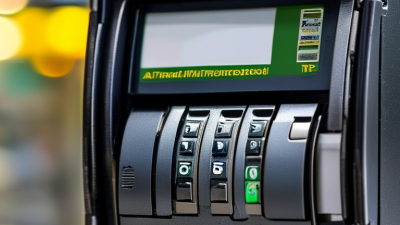
Card readers need equal care. A dependable unit should support secure card handling, accurate reading, and smooth ejection. Key details include contact quality, shutter movement, dust resistance, and firmware control.

The safe is the physical backbone of the machine. Buyers should verify steel thickness, hinge strength, lock protection, fire resistance, and mounting points. A strong safe is useless if its internal fittings are poorly installed.

Control boards connect these components. They manage sensors, motors, communication, and fault reporting. Manufacturers with disciplined quality systems usually provide circuit diagrams, test records, sample approval, and after-sales response procedures. Independent testing remains wise, even when factory documents look complete. One overlooked connector can stop an entire terminal.

Specifications can still miss real-world problems. Temperature changes, paper dust, vibration, and uneven maintenance may expose weaknesses. A better evaluation includes pilot units, endurance testing, spare-part availability, and clear warranty terms. The best supplier is not always the cheapest. It is the one that proves consistency, accepts technical questions, and improves weak points when testing reveals them.

Reliability Metrics: MTBF, Transaction Testing, and Failure-Rate Evidence

China Top 10 ATM Machine Components Manufacturers

Evaluating leading ATM component manufacturers requires more than production volume or attractive pricing. Reliability evidence should begin with mean time between failures (MTBF), measured under clearly defined operating conditions. Ask whether the figure covers the entire module, not only selected parts. Temperature, dust, vibration, and transaction frequency can change results significantly. A high MTBF number means little without test duration, sample size, and failure definitions. Details matter.

Transaction testing provides stronger practical evidence. Manufacturers should test card readers, cash dispensers, receipt printers, keyboards, and display modules through repeated transaction cycles. The test record should show successful transactions, jammed notes, read errors, rejected cards, and recovery time. Testing at low and high cash levels is useful. So is repeated power cycling. Real counters are messy. Laboratory results may look cleaner than field conditions.

Failure-rate evidence should include early-life failures, random failures, and wear-related failures. Request monthly field data, warranty-return rates, and corrective-action records. Compare failures per million transactions, not only failures per unit. One supplier may report fewer defective units because its equipment performs fewer transactions. That comparison can mislead. I would also inspect how quickly engineering teams isolate root causes and update designs. No dataset is perfect. A missing field detail deserves questions, not automatic rejection. Reliability grows when manufacturers disclose weaknesses, document repairs, and repeat tests after design changes.

Compliance Benchmark: EMVCo, PCI PTS, ISO 9001, and CE Certifications

When evaluating the China top 10 ATM machine components manufacturers, compliance should outweigh catalog size. Atm Hardware Components must support EMVCo approval, PCI PTS security, ISO 9001 controls, and CE conformity. EMVCo testing checks payment application behavior and chip communication. PCI PTS examines PIN protection, tamper response, and secure key handling. A metal keypad may look robust, but its internal sensors matter more.

The European Central Bank reported about €1.33 billion in card fraud across the European Economic Area in 2022. That figure explains why secure readers, encrypted PIN pads, and controlled software updates deserve close inspection. PCI Security Standards Council guidance also requires disciplined device management, not only a strong enclosure. Ask suppliers for current test reports, firmware version records, and tamper-event samples. Details matter.

ISO 9001 certification shows that a manufacturer operates a documented quality system. The ISO Survey has recorded more than one million valid ISO 9001 certificates worldwide. Yet paperwork can age. CE marking indicates conformity with applicable European requirements; it is not always an independent laboratory certificate. Buyers should verify the Declaration of Conformity, test scope, and responsible manufacturer. I would also inspect three production samples, not one showroom unit. That extra step is slower. It may prevent an expensive assumption.

Procurement Comparison: Lead Times, Warranty Terms, and Spare-Parts Support

When comparing China’s top ten ATM component manufacturers, procurement teams should score evidence, not polished quotations. For an Automated Teller Machine Machine, critical parts include card readers, receipt printers, keypads, displays, locks, and power modules. Request production samples, inspection records, and serial-level traceability before approving volume orders. In my sourcing reviews, a low unit price often hides longer calibration work or inconsistent packaging. Ask for standard and customized lead times. Get them in writing.

Typical standard components may ship in two to six weeks, while customized interfaces can require eight to twelve weeks. These ranges are not promises. Factory capacity, testing queues, and import documents can change them. Compare quoted lead times with monthly output and recent delivery records. A realistic contract should define inspection windows, defect limits, replacement timing, and freight responsibility. Do not accept “lifetime support” without measurable service levels. It sounds reassuring, but remains vague.

Warranty terms deserve equal attention. Check whether coverage includes labor, firmware compatibility, transit damage, and installation failures. Some suppliers offer twelve months from shipment, shortening practical protection for overseas projects. Spare-parts support should include stock lists, fixed prices, and a named technical contact. Ask how long parts remain available. Also test one emergency order. A supplier may respond quickly during sales, then slow down after payment. That risk is easy to miss. Keep a second source for critical parts.

ATM Machine Parts: A Practical Guide to the Glory GFS-120S Banknote Counter

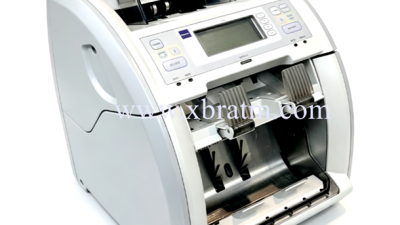
A banknote counter relies on several coordinated parts to deliver fast and accurate counting. The hopper holds the notes before processing, while feed rollers separate them and guide each note through the counting path. Friction pads and belts help maintain consistent movement, especially when notes are worn, folded, or slightly uneven. Optical or magnetic sensors detect the passage of each note, identify double feeds, and support counterfeit-detection functions when equipped. A clear control panel and display allow operators to select counting modes, batch quantities, and error alerts.

Regular maintenance is essential for dependable performance. Dust and paper fibers should be removed from the hopper, rollers, and sensor area with suitable cleaning tools. Worn rollers, belts, and friction pads may cause feeding errors, skipped notes, or inconsistent speeds, so they should be inspected and replaced when their surfaces become smooth or cracked. The power supply, switches, and internal connectors should also be checked by qualified technicians. Using compatible replacement parts and following the equipment’s service specifications can help preserve counting accuracy, reduce downtime, and extend the working life of the machine.

FAQS

How large is the global ATM market?

About 3.1 million ATMs operated worldwide in 2023. This installed base supports continuing demand for replacement components and complete machines.

Which ATM components require careful evaluation?

Important parts include cash dispensers, card readers, encrypted keypads, receipt printers, displays, sensors, locks, and power modules. Each part must work reliably in dusty branches, busy stores, and outdoor kiosks.

Why does component quality affect ATM uptime?

A weak dispenser motor can delay cash delivery. A poorly calibrated sensor may create unnecessary service calls. Small defects can interrupt an entire transaction.

How should buyers test ATM components?

Buyers should request repeated dispensing cycles, heat testing, dust exposure, vibration checks, and power interruption tests. Testing should resemble real locations. Laboratory results alone may not be enough.

What documents should a component supplier provide?

Request dimensional drawings, firmware records, inspection data, traceability details, warranty terms, and production capacity. Clear repair instructions also matter. Missing documents create avoidable uncertainty.

How can buyers verify compatibility with older ATMs?

Check interfaces, mounting dimensions, connector types, firmware requirements, and service tools. Test the replacement part inside the existing machine. Compatibility claims can sometimes look stronger than reality.

What should buyers inspect in a Chinese ATM component supply chain?

Examine regional production links, calibration processes, packaging quality, and connector consistency. Confirm replacement rollers, belts, and sensor boards remain available for years. The supply chain may appear simple, but it often is not.

Is the cheapest ATM component the best choice?

Not usually. Price is not everything. Cheap parts may cause repeated repairs, delayed transactions, and higher maintenance costs. A slightly higher purchase price can support better long-term uptime.

Can a top-ten supplier ranking guarantee quality?

No ranking can replace technical verification. One supplier may build strong metal frames but lack software integration experience. Another may offer low prices but weak support. Buyers should compare measurable performance instead.

Conclusion

China’s ATM component industry supports a broad ecosystem of modules, technical standards, and coordinated supply chains. With more than 3.1 million ATMs operating globally in 2023, manufacturers are increasingly evaluated by their ability to provide reliable dispensers, card readers, electronic control boards, secure safes, and integrated subassemblies. A practical top-ten comparison should therefore consider product range, OEM customization, production capacity, engineering support, and consistency across different ATM configurations.

For buyers, performance evidence is as important as product variety. Key evaluation criteria include MTBF, transaction-cycle testing, documented failure rates, EMVCo and PCI PTS alignment, ISO 9001 quality systems, and applicable CE compliance. Procurement decisions should also compare lead times, warranty coverage, replacement-part availability, technical response, and long-term maintenance support. By reviewing these factors together, organizations can identify dependable Atm Machine Components suppliers that balance quality, security, integration flexibility, and total ownership cost.
Ethan

Ethan

Ethan is a seasoned marketing professional at Shenzhen Xinbangrong Technology Co., Ltd. (XBR), a leading supplier of ATM products since 2014. With a deep understanding of the industry, he specializes in promoting a comprehensive range of products, including ATM machines, currency exchange kiosks,......
Previous 2026 Best Self ATM Machine for Global Buyers