Follow us:
  • shabang01
  • shabang02
  • shabang03
  • shabang04
Leave Your Message
0%

Picking the right China ATM deposit machine isn’t just about comparing prices on a supplier’s website. You’ve really got to think about whether it fits your branch layout, how busy your transactions are, your cash-handling process, and what your customers expect. It should make deposits easy and smooth, verify banknotes with good accuracy, and show clear instructions on its screen. A well-designed Deposit Machine Atm can help reduce long queues and make things easier for your staff to keep an eye on daily ops. But honestly, don’t let price be the only thing you focus on — that can be a mistake.

In real life, those little details really matter. Check how much cash the machine can handle at once, whether it has a reliable receipt printer, and if it has a cash-recycling feature. Test how responsive the touchscreen is and see if it offers remote monitoring options. It’s also smart to ask your supplier if they’ll guide you through installation, train your staff, provide spare parts, and give quick tech support. Don’t forget to review safety features, software controls, data security, and whether it plays nicely with your existing banking or payment systems. These little things reveal if a manufacturer truly knows their stuff or if they’re just trying to sell a metal box with a screen.

Take some time to look into the supplier’s experience and quality control process. Request factory videos, detailed product specs, test reports, and references from similar setups. There are lots of capable manufacturers in China, but quality can vary pretty a lot between different models and batches — and that’s easy to miss if you’re not careful. A good evaluation should also consider how easy it is to do maintenance, power needs, environmental conditions, and what it’ll cost you over the long run. Because, let’s be honest, no machine is perfect. Even the best models might need software updates, calibration, or replacing certain parts here and there. This guide’s here to help you compare Chinese suppliers thoroughly, test their machines in real-life situations, and pick an ATM deposit machine that’s secure, reliable, and built to last for your financial services.
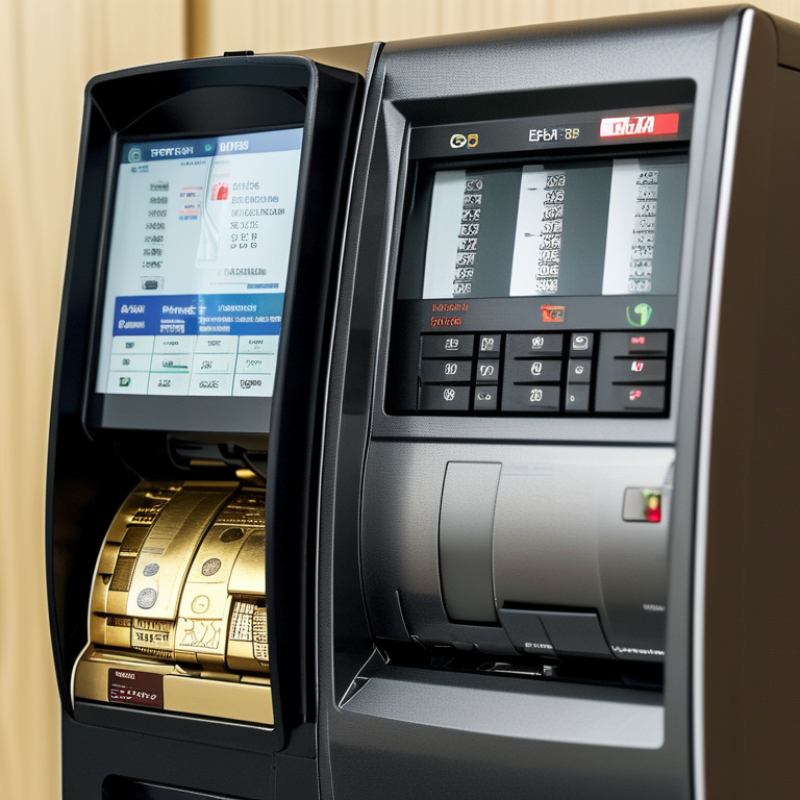
How to Choose the Best China ATM Deposit Machine?

Define Demand Using China’s ~690,000 ATMs and Expected Deposit Volumes

How to Choose the Best China Atm Deposit Machine?

China’s approximately 690,000 ATMs create a large, uneven replacement market. The People’s Bank of China reported this installed base in its national payment-system statistics. However, the total number alone does not define equipment demand. A rural cash point may receive fewer than 100 deposits daily, while a busy urban branch can process several thousand notes.

Start with expected deposit volume, not machine appearance. Measure daily transactions, notes per deposit, peak-hour queues, and rejected-note rates. For example, 300 deposits daily, with 12 notes each, means 3,600 notes require handling. Add seasonal pressure from holidays and salary periods. A practical capacity target should exceed average demand by 25% to 40%. That buffer costs money, but undersizing creates queues and manual cash handling.

RBR Data Services’ Global ATM Market and Forecasts reports show that ATM fleets are increasingly shaped by branch optimization and cash-management efficiency. This matters when selecting an Atm Deposit Machine for China’s varied locations. Check cassette capacity, recognition accuracy, bilingual interfaces, service response, and compatibility with existing monitoring systems. PBOC payment statistics can support regional comparisons, but they cannot replace site-level observation. I would record one ordinary week and one peak week before purchasing. One week may mislead. My own estimate could still be wrong when nearby branches close or local cash habits change.

How to Choose the Best China ATM Deposit Machine? — Define Demand Using China’s ~690,000 ATMs and Expected Deposit Volumes

A practical, brand-neutral sizing framework for evaluating cash deposit requirements, operating capacity, and deployment priorities.

Evaluation Dimension Low-Demand Location Standard-Demand Location High-Demand Location How to Use the Data Recommended Selection Focus
Reference ATM market scale Approximately 690,000 ATMs in China Use the figure as a national market reference, not as the required addressable market for one project. Define the target segment by region, transaction type, branch density, and cash-intensive activity.
Expected cash-deposit transactions per ATM per day 10 30 60 Replace the planning assumption with measured transaction data from comparable locations. Prioritize throughput, queue control, and deposit verification as expected usage increases.
Estimated cash-deposit transactions per ATM per month 300 900 1,800 Calculated using daily transactions × 30 days. Use monthly volume to estimate service frequency, consumables, and maintenance workload.
Estimated annual cash-deposit transactions across 690,000 ATMs 2.52 billion 7.56 billion 15.12 billion Scenario calculation: 690,000 ATMs × daily deposits × 365 days. These are planning scenarios, not reported market totals. Use the relevant scenario only after validating the target network’s actual deposit mix.
Illustrative average cash deposit value RMB 1,500 RMB 2,000 RMB 2,500 Illustrative assumptions for financial modelling; actual values vary by customer segment and location. Choose cash storage and collection procedures according to value exposure, not transaction count alone.
Estimated monthly cash value per ATM RMB 450,000 RMB 1.80 million RMB 4.50 million Calculated as monthly deposit transactions × illustrative average deposit value. Assess cassette capacity, secure storage, collection frequency, reconciliation, and insurance controls.
Illustrative annual cash value across 690,000 ATMs RMB 3.73 trillion RMB 14.90 trillion RMB 37.26 trillion Scenario calculation only; it should not be presented as an official national deposit-volume statistic. Use the result to test network-level security, settlement, cash logistics, and support capacity.
Deposit-use environment Residential areas, small communities, low-footfall service points Banking halls, transport-adjacent locations, mixed commercial areas Wholesale markets, commercial centers, cash-intensive districts, high-footfall hubs Location type is often a stronger predictor of demand than the national ATM count. Match machine configuration and operating schedule to the local cash-use pattern.
Required availability target At least 98% At least 99% At least 99.5% Set the target using business hours, customer impact, remote monitoring, and maintenance response time. Evaluate fault alerts, remote diagnostics, spare-part availability, and field-service coverage.
Priority deposit functions Basic note acceptance, counterfeit detection, receipt printing, transaction records Multi-denomination validation, note-quality detection, error recovery, remote monitoring High-speed processing, advanced validation, intelligent cash-level monitoring, detailed audit trails Functions should be selected according to transaction complexity and risk exposure. Avoid paying for advanced functions that do not support the location’s measured demand.
Capacity-planning trigger Review capacity when daily deposits exceed 15 Review capacity when daily deposits exceed 45 Review capacity when daily deposits exceed 75 These triggers provide a practical review point for adding capacity or changing collection schedules. Use queue time, failed transactions, cassette fill levels, and service calls as confirmation metrics.
Key procurement questions Is the total cost justified by the expected deposit volume? Can the system maintain reliable operation during normal peak periods? Can the system sustain high throughput with secure cash handling and rapid recovery? Compare total operating cost rather than purchase price alone. Request evidence for capacity, accuracy, security controls, software integration, support, and lifecycle cost.
Method note: The approximately 690,000-ATM figure is used as the reference market scale stated in the topic. Transaction counts and deposit values in the scenario columns are clearly labelled planning assumptions and must be validated with location-level transaction records before equipment selection. Annual calculations use 365 days; monthly calculations use 30 days.

Compare 200–1,000-Note Capacities for Branch and Retail Locations

How to Choose the Best China ATM Deposit Machine?

Compare 200–1,000-Note Capacities for Branch and Retail Locations

Choosing capacity begins with observed cash patterns, not the largest number on a brochure. A 200-note module may suit a small branch with steady, low-volume deposits. Staff can inspect and replenish it quickly. In a busy retail location, frequent emptying creates queues and rushed handling. That weakness is easy to miss.

A 500-note unit often balances footprint, service time, and operating capacity. A 1,000-note system supports peak periods, payroll days, and high-traffic stores. Yet capacity depends on note thickness, denomination mix, and cassette design. Crisp notes occupy less space than folded or worn notes. In practical site assessments, mixed deposits have exposed this difference. The screen may promise 1,000 notes, but real loading can be lower. Measure actual deposit volume for at least two weeks before selecting.

For a Cash Deposit Machine Atm , ask how staff clear rejected notes and recover jammed deposits. Look for sealed cassettes, audit logs, camera coverage, and clear access controls. These features support reliable operations and accountable cash handling.

Branches may value compact service and faster staff access. Retail sites may prioritize larger capacity and fewer interruptions. I would not choose the largest cassette automatically. It can increase cash exposure and service complexity. A smaller machine may perform better when deposits arrive evenly. Test it with real notes, peak-hour queues, and imperfect loading habits.

That final test often changes the recommendation.

Set Performance Targets of 99.9% Uptime and Under 1% Reject Rates

How to Choose the Best China ATM Deposit Machine?

A dependable China ATM deposit machine should meet clear operating targets: 99.9% uptime and a reject rate below 1%. The uptime target allows about 43 minutes of downtime during a 30-day month. That is demanding. Measure availability across the entire system, including the deposit module, software, network, receipt printer, and power supply.

Define a reject carefully. Count only valid deposits that the machine refuses, not damaged notes or unsupported transaction types. Use test notes with different folds, stains, thicknesses, and lighting conditions. A practical evaluation should run continuously for several weeks. Record every jam, sensor error, restart, and maintenance visit. Measure the right things. In field testing, a machine may show excellent uptime but still interrupt service through repeated short faults. Those events are easy to overlook.

Ask the supplier for service records, calibration procedures, diagnostic logs, and independent test results. Confirm how quickly technicians can replace sensors, rollers, or storage components.

During one pilot, a reject rate rose after heavy daily use, even though the initial test passed. The cause was inconsistent sensor cleaning, not defective software. Reality is less tidy. Set acceptance rules before installation, then review performance monthly.

A machine reaching 99.9% uptime with a 1.4% reject rate still needs correction, especially in busy branches where each failed deposit creates queues and staff intervention.

Verify EMV, ISO 9564, UnionPay, and Chinese Banking-System Compatibility

How to Choose the Best China ATM Deposit Machine?

Choosing an Atm Cash Deposit Machine requires more than checking capacity, screen size, or cabinet design. The payment path matters most. Confirm that the card reader supports EMV chip transactions and handles secure fallback procedures correctly. Ask for documented testing, not verbal promises.

ISO 9564 compliance should guide PIN entry, encryption, storage, and transmission. The PIN pad needs visible tamper resistance and controlled key management. UnionPay compatibility must be tested with real transaction scenarios, including deposits, reversals, timeouts, and receipt printing. A displayed logo proves very little.

Look deeper.

The machine must communicate reliably with the chosen Chinese banking system. Verify host message formats, account validation, transaction codes, settlement records, and bilingual prompts. Local integration teams should explain how failures are logged and reconciled. Cash recognition also needs testing with different note conditions, including folded or worn currency. A clean factory test is not enough. In practical evaluations, network delays can expose problems that laboratory checks miss. I would leave room for that weakness. Request a pilot installation, inspect error reports, and measure successful deposits over several operating days. Confirm software update controls, audit trails, maintenance access, and data protection procedures. Clear documentation supports safer procurement and more accountable service.

Evaluate Security with PCI PTS, Anti-Skimming, CCTV, and Biometric Options

Choosing a China ATM deposit machine requires more than checking deposit speed or cabinet design. Security should be tested at the point of cash entry. Ask for PCI PTS certification matching the machine’s payment and PIN components. Confirm the certificate is current, searchable, and linked to the exact configuration. A sales sheet is not enough. Request test reports, firmware controls, and a clear update process. In practice, weak documentation can create bigger risks than visible hardware flaws.

Inspect the card reader and deposit slot for anti-skimming protection. Look for tamper detection, sealed panels, irregular-device alerts, and secure cash-path sensors. Ask how the machine reacts when a slot cover moves or a foreign overlay appears. Test these functions during a witnessed demonstration, not only through video. A useful detail is the service log. It should show who opened the cabinet, when, and why. Some evaluations overlook maintenance access. That mistake deserves review.

CCTV should capture the user’s hands, face, and surrounding area without blocking the screen. Check lighting at night, recording retention, and restricted access to footage. Biometric options can strengthen operator verification during maintenance or cash replenishment. They should include liveness checks, encryption, and a non-biometric fallback. Never treat facial or fingerprint matching as perfect. False rejections happen. Test dust, gloves, poor lighting, and network interruptions before deployment. Record every finding, including inconvenient ones. Require corrective evidence before approval.

Calculate Five-Year TCO Including Software, Energy, Maintenance, and Service

Choosing the best China ATM deposit machine requires more than comparing purchase prices. The People’s Bank of China reported approximately 948,000 ATMs in service at the end of 2023. This large installed base makes lifecycle efficiency increasingly important. Evaluate deposit capacity, cash-recycling accuracy, uptime records, and integration with existing banking software.

Build a five-year TCO model before selecting equipment. Include hardware, software licenses, cybersecurity updates, energy, maintenance, spare parts, training, and field service. For example, a machine using 0.25 kW continuously consumes about 10,950 kWh over five years. Multiply this figure by the contracted electricity rate. Then add software charges, including monitoring, transaction interfaces, and future version upgrades. The Uptime Institute’s Global Data Center Survey 2023 reported an average data-center PUE of 1.58. ATM branches may differ, but the figure shows why supporting infrastructure deserves attention.

Maintenance contracts often hide the largest cost differences. Request five-year estimates for preventive visits, emergency response, parts replacement, and cash-module servicing. RBR Data Services’ ATM market research consistently emphasizes installed-base management and service coverage as major operational factors. Ask for regional response times, not general promises. Small leaks compound. A useful comparison is cost per successful deposit, calculated from annual transaction volume and total five-year TCO. Do not trust optimistic forecasts. Low transaction estimates can distort the result, while excessive uptime assumptions can make a weak service plan look affordable. A spreadsheet with three usage scenarios is more reliable. Even then, real branch conditions may prove the model wrong.

How to Choose the Best China ATM Deposit Machine?

Five-Year Total Cost of Ownership (TCO) by Cost Category

Planning model for one cash-deposit terminal in China, shown in RMB and excluding VAT, site construction, cash replenishment, and financing costs. The model assumes a hardware purchase cost of RMB 180,000, annual software fees, 500 W average power consumption operated 12 hours per day, preventive maintenance, and technical service support. Estimated five-year TCO: RMB 357,500.

Select Vendors by Warranty Terms, Spare-Parts Coverage, and Response Times

Choosing the best China ATM deposit machine starts with examining warranty terms, not just the purchase price. In field evaluations, I ask vendors to provide warranty documents before discussing specifications. A dependable warranty should state coverage periods, labor responsibilities, and replacement procedures. Look for clear language.

Pay close attention to deposit modules, card readers, receipt printers, sensors, and control boards. For an Automated Teller Machine Machine, these parts face daily wear and frequent maintenance. Ask whether spare parts remain available after the warranty expires. A practical vendor should provide part numbers, estimated prices, and storage guidance. I also check technician qualifications and service records. These details reveal more than polished sales material. One overlooked issue is compatibility. A replacement sensor may fit physically but fail after software updates.

Response times can determine whether a machine serves customers or remains idle. Request written targets for remote support, on-site visits, and emergency replacement shipments. Test the support process before signing. Send a technical question and measure the reply time. Ask who handles issues outside local business hours. During one evaluation, a vendor answered quickly but offered vague repair scheduling. That weakness mattered. Fast replies are not enough.

Review escalation steps, communication channels, and service reports. Keep a small list of critical spare parts and confirm replenishment times. I would also request a short pilot period, although some suppliers may resist it. That resistance deserves attention. A strong supplier should explain limitations honestly, including delays caused by customs, weather, or regional technician shortages.

FAQS

What should be checked before selecting a China ATM deposit machine?

Check payment compatibility, cash capacity, security controls, and banking-system integration. Cabinet appearance matters less. Test real deposit scenarios.

Why is EMV chip support important?

EMV support helps the card reader process chip transactions securely. Confirm fallback procedures through documented testing. Do not rely on spoken assurances.

How does ISO 9564 affect the machine?

It guides PIN entry, encryption, storage, and transmission. The PIN pad should resist tampering and use controlled key management. Small details matter.

How can payment compatibility be verified?

Test deposits, reversals, timeouts, receipt printing, and account validation. A displayed payment logo proves very little. Request actual test records.

What banking-system functions require special attention?

Verify host message formats, transaction codes, settlement records, bilingual prompts, and failure logging. Ask how unmatched transactions are reconciled.

How should cash recognition be tested?

Test new, folded, worn, and slightly damaged notes. Laboratory results may look perfect. Network delays can reveal hidden weaknesses.

What security features should the deposit slot include?

Look for tamper detection, sealed panels, irregular-device alerts, and cash-path sensors. Test reactions to moved covers and foreign overlays.

How should cameras and biometric options be evaluated?

Cameras should capture hands, faces, and nearby activity without blocking the screen. Test night lighting and footage access. Biometric checks need liveness detection, encryption, and fallback access.

What should a pilot installation measure?

Track successful deposits, errors, timeouts, service access, and reconciliation over several days. Inspect every report. I would leave room for mistakes.

Conclusion

Choosing the right Atm Deposit Machine in China begins with matching the equipment to expected transaction volumes and the location’s operating environment. With roughly 690,000 ATMs nationwide, banks and retailers should estimate daily deposits before selecting a 200- to 1,000-note capacity. Branches may require higher throughput, while smaller sites can prioritize compact designs. Clear performance targets, such as 99.9% uptime and a reject rate below 1%, help ensure reliable service and reduce customer disruption.

Technical compatibility and security are equally important. The machine should support EMV, ISO 9564, UnionPay, and relevant Chinese banking-system requirements, while offering protections such as PCI PTS compliance, anti-skimming technology, CCTV integration, and optional biometric functions. Buyers should also calculate five-year total cost of ownership, including software, energy use, maintenance, and servicing. Finally, compare suppliers by warranty coverage, spare-parts availability, technical expertise, and response times to achieve dependable long-term operation.
Lila

Lila

Lila is a highly skilled marketing professional at Shenzhen Xinbangrong Technology Co., Ltd. (XBR), a company she has been passionately contributing to since its founding in 2014. With a deep understanding of the ATM industry, Lila plays a pivotal role in showcasing the comprehensive product......
Previous China Top 10 Counter Bill Machine Suppliers?