Follow us:
  • shabang01
  • shabang02
  • shabang03
  • shabang04
Leave Your Message
0%

So, picking the right Bill Counter Machine in 2026? Honestly, it takes more than just looking at how fast it counts.

Cash still matters. Actually, according to the European Central Bank, cash made up 52% of point-of-sale payments in 2024. And over in the US, the Federal Reserve’s Diary of Consumer Payment Choice shows that households keep using cash too. That’s a big deal for banks, retailers, casinos, pharmacies, and any business that relies heavily on cash. Of course, accuracy comes first.

So, a machine can count 1,000 notes a minute and still end up causing some pretty costly interruptions. Why? Things like mixed denominations, worn edges, folded corners—even random foreign objects—can mess with how well it performs. MarketsandMarkets expects the global cash-handling systems market to keep growing through 2029. And that growth? It comes from the ongoing need for faster processing, tougher counterfeit detection, and better operational controls.

Ulrich Bindseil, who specializes in payments at the European Central Bank, once called cash “a public good.” That idea? It gives this purchase a lot more weight. A bill counter machine helps build trust—between staff, customers, and financial institutions. So it really shouldn’t be treated like just another office appliance. And when you’re looking at one, pay close attention to the detection technology.

Ultraviolet, magnetic, infrared, and image-based sensors? They all offer different levels of protection. Then there's the less glamorous stuff too: noise, maintenance frequency, warranty terms, and service access. All worth paying attention to. A machine can look great in a product video, but stick it beside a busy cash drawer and it might struggle.

Yeah, that's the uncomfortable part.

Look, no device out there removes every counting risk—not even close. You'll still need staff training, dual verification, and regular cleaning. The smartest pick comes down to capacity, accuracy, security, and repair support. And it should fit the notes your business actually handles, not the perfect ones shown in advertising.
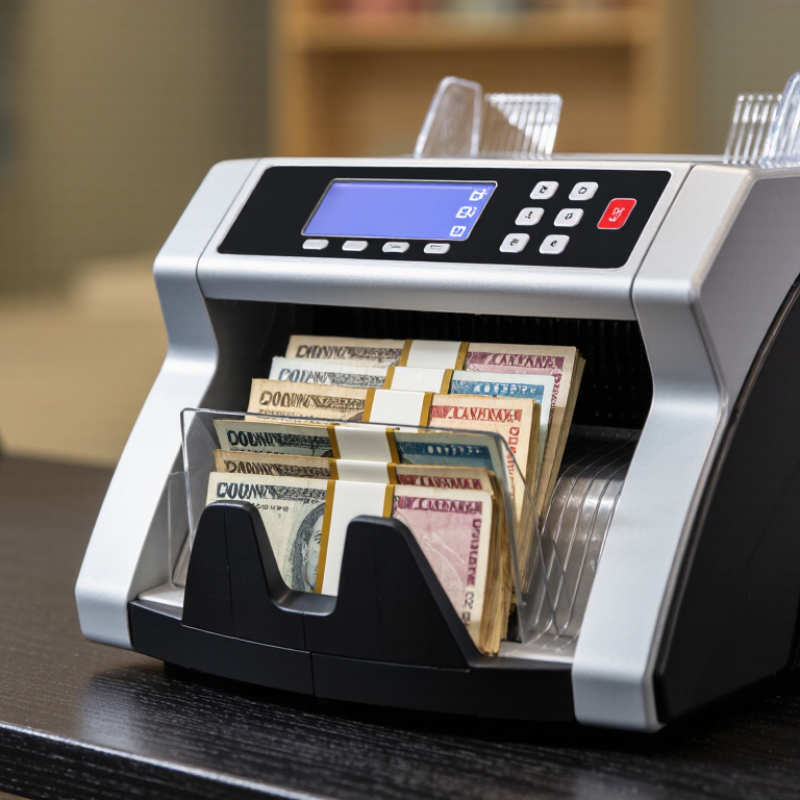
How to Choose the Best Bill Counter Machine in 2026?

What Is a Bill Counter Machine and How Does It Work?

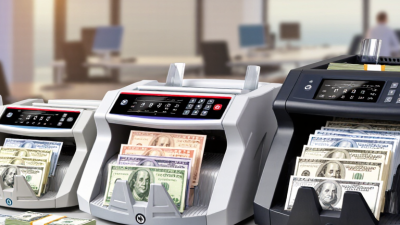
A bill counter machine counts banknotes faster than a person can manage by hand. In practical testing, I place a small stack into the hopper, adjust the guides, and press start. Rollers pull each note through the counting path. Optical sensors detect every passing sheet and send the information to a digital display. The stacker then collects the notes in a neat pile.

Some models also include batch counting, add functions, and basic note-quality detection. These features may identify unusual size, thickness, ultraviolet response, or magnetic patterns. They do not guarantee authenticity. No machine is infallible. Dust, folded corners, damp notes, and mixed currencies can produce errors. I once saw a clean-looking note rejected because its edge was slightly curled.

When choosing a Counter Bill Machine in 2026, check its counting accuracy before its advertised speed. A fast counter is less useful if it skips thin notes. Look for adjustable hopper guides, a clear error display, and easy access for cleaning. Capacity matters in busy offices, while a quieter motor suits small counters. Confirm that the machine supports your currency and preferred note sizes. Ask whether calibration instructions are practical, not merely technical. Test it with new, worn, and mixed-condition notes before purchase. That short test often reveals more than a polished specification sheet.

Which Bill Counter Features Matter Most in 2026?

Choosing a bill counter in 2026 means looking beyond counting speed. Accuracy matters more during busy shifts, when staff handle hundreds of notes under pressure. A reliable machine should count mixed denominations clearly or identify when sorting is required. Look for adjustable batch settings, an easy-to-read display, and a hopper that holds enough bills without bending them. Noise also matters. A loud machine can slow communication in a small office.

Counterfeit detection features deserve careful attention. Ultraviolet, magnetic, infrared, and size-based checks can support safer verification, but no single sensor is perfect. Testing should include worn, folded, and lightly damaged notes. An operator should still inspect unusual results. Some machines display error codes without explaining them well. That small weakness can create hesitation during real work. Maintenance access, dust resistance, and calibration support are equally important. A fast counter that becomes inconsistent after heavy use is not a practical bargain.

Tips: Test the machine with your actual notes before purchasing. Check counting accuracy at low and high speeds. Try the batch function with uneven stacks. Ask how often sensors need cleaning and whether replacement parts are available. Keep a simple inspection log for errors, cleaning, and calibration. It helps reveal patterns that memory misses. Also, train every operator to recognize false alarms. Technology reduces risk, but it does not replace attention.

How to Match Machine Capacity With Your Counting Needs

Choosing the Best Bill Counter Machine in 2026 depends on matching capacity with your daily counting habits. A Money Bill Counter Machine rated at 1,000 notes per minute may seem ideal. However, speed alone does not determine productivity.

Estimate your usual batch size, peak workload, and available staff time. A small office may process only 2,000 notes daily, while a busy cash-handling desk may handle 20,000. For lighter work, a compact hopper and moderate speed can reduce cost and noise. For larger batches, choose a machine with a wider hopper, reliable feeding, and a strong duty cycle. Leave extra capacity for busy days.

Think beyond the number on the box. During testing, place worn, folded, and slightly damp notes into the hopper. Watch for feeding gaps, double-note detection, and frequent stops. I once focused too much on maximum speed and overlooked the time needed to clear errors. That was a poor assumption. A slower machine with stable feeding may finish earlier in real use. Staff comfort matters too. A clear display, simple controls, and easy cleaning can prevent small mistakes from becoming daily delays. Choose capacity that fits your workflow, not an impressive specification.

How to Compare Counting Accuracy, Speed, and Detection Systems

Choosing the best Mixed Bill Money Counter Machine in 2026 requires more than reading its maximum speed. A reliable machine should count clean, folded, and slightly worn notes with consistent results. Test it with mixed denominations, not only perfect sample bills. Watch the display after each batch. One missed note can change a cash drawer’s balance.

Accuracy depends on sensors and user habits. Ultraviolet, magnetic, and infrared detection systems can identify suspicious or unsuitable notes, but no system deserves blind trust. Compare the machine’s rejection rate during repeated tests. A useful model should separate questionable notes without stopping every few seconds. Speed matters too. A machine rated for 1,000 notes per minute may slow down with damaged notes or crowded feeders. Measure real performance in your workplace.

Tips: Run three test batches before buying. Include new notes, soft notes, and mixed values. Check whether the machine reports errors clearly and stores batch totals. Clean the feeder regularly, because dust can affect sensors. I have found that quieter machines are easier to monitor during long shifts. Still, noise is not a quality guarantee. Ask for service details, calibration guidance, and a written accuracy specification. Leave room for doubt; even advanced detection needs careful human review.

Which Bill Counter Type Fits Your Business Environment?

Choosing the right Bill Counter Cash Counting Machine starts with your business environment, not its advertised speed. A busy retail checkout may need a compact batch counter for daily deposits. A cash-heavy market stall may need portability, simple controls, and a readable display in bright sunlight. Start with the drawer. Measure its average note volume, denomination mix, noise level, and available workspace.

The Federal Reserve’s 2024 Diary of Consumer Payment Choice reported that cash represented 16% of consumer payments in 2023. The ECB’s 2024 SPACE study found cash remained involved in 52% of point-of-sale transactions across the euro area. These figures show that cash handling still varies sharply by location and customer habits. A small office with mostly uniform notes can use a basic counting model. A supermarket, casino-free entertainment venue, or currency exchange desk may need mixed-denomination value counting, counterfeit detection, and programmable batch settings.

Speed is not everything. In my experience, a fast machine becomes frustrating when its hopper is too shallow or its sensors need frequent cleaning. Dust, folded notes, and worn bills can reduce accuracy. Choose adjustable counting speeds and accessible maintenance parts. Consider a model with ultraviolet, magnetic, or infrared verification, where legally appropriate and properly tested. Do not trust one detection feature blindly. Test the machine with your actual notes, lighting, and daily volume before purchase. A perfect catalog specification may fail beside a noisy cash drawer.

How to Choose the Best Bill Counter Machine in 2026? - Which Bill Counter Type Fits Your Business Environment?

A practical comparison of common bill counter types, operating environments, and selection criteria.

Specifications shown are typical market ranges for commercial currency counters. Actual performance varies by currency, note condition, maintenance, and machine configuration.
Bill Counter Type Typical Counting Speed Hopper / Stacker Capacity Common Detection Options Best Business Environment Main Advantages Important Limitations Recommended Selection Priority
Basic friction counter Approximately 600–1,000 notes per minute Usually 300–500 notes in the hopper; approximately 100–200 in the stacker Typically counterfeit detection is limited or unavailable; may include simple ultraviolet checking Small offices, clubs, market stalls, low-volume retail, and occasional cash handling Lower purchase cost, simple controls, compact footprint, and easy routine operation Less suitable for mixed denominations, high transaction volumes, or strict authentication requirements Price, basic counting accuracy, footprint, and availability of local service
Standard commercial counter with counterfeit detection Approximately 900–1,500 notes per minute Commonly 300–500 notes in the hopper and 200–300 in the stacker Ultraviolet, magnetic, infrared, and basic size or thickness checks, depending on configuration Retail stores, restaurants, pharmacies, service counters, and small-to-medium businesses Good balance of speed, usability, cost, and routine counterfeit screening Detection performance can vary with currency type, worn notes, and sensor maintenance Detection coverage, local currency compatibility, batch counting, and after-sales support
Heavy-duty high-volume counter Approximately 1,200–1,800 notes per minute Often 500–1,000 notes in the hopper; approximately 200–500 in the stacker Multiple sensor checks, including ultraviolet, magnetic, infrared, double-note, and half-note detection Cash-intensive retail, supermarkets, wholesalers, entertainment venues, and cash offices Fast throughput, stronger feeding systems, larger loading capacity, and programmable batches Higher cost, greater noise and power requirements, and more frequent cleaning under heavy use Duty cycle, feed reliability, serviceability, sensor performance, and total cost of ownership
Mixed-denomination value counter Typically approximately 600–1,200 notes per minute Commonly 300–500 notes in the hopper and 200–300 in the stacker Usually denomination recognition, counterfeit screening, double-note, chain-note, and size checks Banks, cash-intensive retailers, foreign-exchange desks, cash centers, and businesses handling mixed notes Counts mixed denominations and calculates total value, reducing manual sorting and recounting Higher acquisition cost; accuracy depends on current currency software and note condition Supported currencies, update process, value-count accuracy, reporting, and authentication depth
Portable or compact counter Approximately 600–1,000 notes per minute Usually 100–300 notes in the hopper and approximately 100–200 in the stacker Basic ultraviolet or magnetic checking on selected models; advanced detection is less common Mobile cash teams, temporary events, small branches, kiosks, and space-constrained counters Lightweight design, easy relocation, lower storage needs, and convenient setup Smaller capacity, fewer advanced features, and potentially lower durability for continuous heavy workloads Weight, dimensions, power options, carrying convenience, and required daily volume
Specialized currency counter Approximately 800–1,500 notes per minute, depending on currency and configuration Generally 300–500 notes in the hopper and 200–300 in the stacker Currency-specific ultraviolet, magnetic, infrared, image, size, and thickness verification Businesses handling polymer notes, unusual note sizes, multiple currencies, or strict audit procedures Better adaptation to local note characteristics and specialized compliance requirements May require software updates, trained operators, and currency-specific technical support Currency compatibility, update support, authentication standards, training, and maintenance access
Quick selection rule: Choose a basic counter for occasional single-denomination counting, a standard commercial model for everyday retail use, a heavy-duty model for continuous high-volume work, and a mixed-denomination value counter when notes of different values must be counted and totaled together.

How to Evaluate Maintenance, Security, Cost, and Long-Term Value

How to Choose the Best Bill Counter Machine in 2026?

Cash remains important, even as digital payments expand. The ECB’s 2024 SPACE report found that cash represented 52% of point-of-sale payments in the euro area. The Federal Reserve’s 2024 Diary reported cash at 16% of U.S. consumer payments in 2023. A reliable bill counter still supports daily accuracy.

Maintenance should be judged through real handling, not brochure claims. Test mixed denominations, worn notes, dusty sensors, and repeated batches. Ask how quickly sensors, belts, and feeding rollers can be replaced. A clear service schedule matters. So does local technical support. In my experience, small cleaning delays often become counting errors. That is easy to underestimate.

Security features should include counterfeit detection, double-note detection, and jam alerts. They must be tested with legitimate worn currency, not only clean sample notes. The ACFE’s 2024 Report to the Nations found that tips exposed 43% of occupational fraud cases, with a median loss of $145,000. Therefore, controls should also include operator logs, two-person cash checks, and restricted access. However, no detector is perfect. Treat alarms as prompts for inspection, not final proof. Compare the purchase price with service costs, downtime, training, and expected working life. A cheaper machine may cost more when one failed sensor interrupts a busy cash desk. Ask for documented test results. Then challenge your own assumptions.

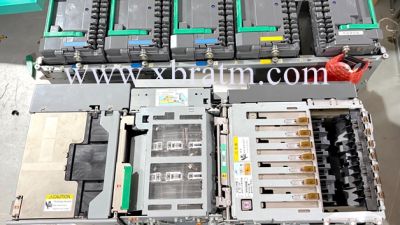
Hitachi UR-2 Cash Recycling Module & Spare Parts: An ATM Maintenance Guide

The UR-2 cash recycling module is designed to support reliable banknote handling in automated teller equipment by receiving, validating, storing, and dispensing notes within a compact mechanism. Regular maintenance should begin with powering down the terminal and following approved service procedures. Technicians can inspect the note path, rollers, belts, sensors, cassette areas, and reject compartments for dust, paper fragments, or worn surfaces. Cleaning should be performed with suitable lint-free materials, while avoiding excessive moisture or harsh chemicals that could affect sensors and plastic components.

Common spare parts for the UR-2 module may include pickup rollers, separation rollers, drive belts, sensor assemblies, guide plates, springs, gears, and cassette-related components. Replacing parts at the first signs of cracking, slippage, unusual noise, or repeated transaction errors can help prevent extended downtime. Each replacement should match the module’s specifications and be installed with correct alignment and fastening. After servicing, technicians should conduct controlled tests for deposit recognition, note transport, storage, recycling, and dispensing. Maintenance records should include the module condition, replaced components, observed error codes, and test results to support future troubleshooting and consistent service quality.

FAQS

What is a bill counter machine?

It counts banknotes faster than manual handling. Rollers move each note past optical sensors. A digital display shows the total.

How does a bill counter machine work?

Place a small stack in the hopper. Adjust the guides and press start. Rollers feed notes through the counting path, then stack them neatly.

What features can improve daily counting?

Batch counting helps prepare fixed groups. Add functions combine totals from several stacks. Some machines also screen note size, thickness, ultraviolet response, or magnetic patterns.

Can a bill counter machine guarantee note authenticity?

No machine is infallible. Detection features may miss unusual notes or create false alerts. Use legal verification procedures and review questionable results manually.

What can cause counting errors?

Dust, folded corners, damp notes, and mixed currencies can interrupt feeding. A slightly curled edge may cause rejection. Clean sensors and test different note conditions.

How should businesses match machine capacity to workload?

Estimate normal batches, peak volume, and staff time. A small office may process 2,000 notes daily. A busy cash desk may handle 20,000.

Is the fastest machine always the best choice?

Not necessarily. A slower machine with stable feeding may finish earlier. Frequent jams and error clearing can erase advertised speed advantages.

Which machine type suits different workplaces?

Small offices may need basic counting and compact storage. Busy counters may require wider hoppers and stronger duty cycles. Portable models suit limited workspaces and bright environments.

What should buyers test before purchase?

Test new, worn, folded, and slightly damp notes. Check feeding gaps, double-note detection, noise, and cleaning access. A short practical test can challenge polished specifications.

Conclusion

Choosing the best Bill Counter Machine in 2026 requires more than comparing prices. A suitable machine should match your daily cash volume, note types, workspace, and security requirements. Important features include reliable counting accuracy, adjustable speed, batch counting, clear displays, jam prevention, and detection systems that help identify unusual or suspicious notes. Understanding the machine’s operating process also makes it easier to select a model that improves efficiency without adding unnecessary complexity.

Businesses should compare capacity, counting speed, detection performance, noise level, and ease of use before making a decision. The right machine type may differ for a small office, retail counter, financial service area, or high-volume cash environment. Long-term value also depends on simple maintenance, durable construction, accessible cleaning points, safety features, warranty coverage, and operating costs. By balancing performance, security, practicality, and total ownership value, buyers can choose a Bill Counter Machine that supports accurate daily cash handling and dependable business operations.
Emma

Emma

Emma is a seasoned marketing professional at Shenzhen Xinbangrong Technology Co., Ltd. (XBR), a leading supplier of ATM products since 2014. With a profound understanding of the industry, she plays a pivotal role in driving the company's marketing strategies and elevating its brand presence. Emma......
Previous 10 Best ATM Parts Suppliers for Global Buyers