


Follow us:
  • shabang01
  • shabang02
  • shabang03
  • shabang04
Leave Your Message

What Is an ATM?

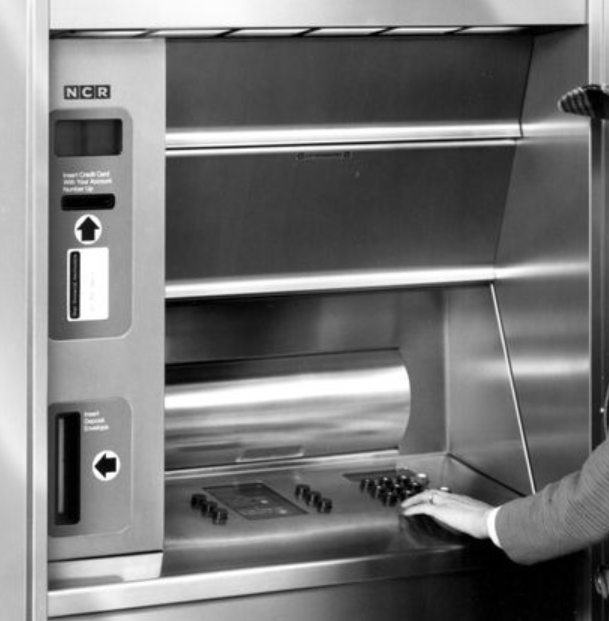
An Automated Teller Machine (ATM) enables customers to withdraw cash, make deposits, transfer funds and execute basic banking transactions β€” entirely without a human teller. Built around a card reader, encrypted PIN pad, cash dispenser or recycler, receipt printer and secure host connection, the ATM remains the indispensable physical backbone of retail banking worldwide.
🌍
3.5M+
ATMs Active Globally
πŸ’³
$18T+
Annual Cash Dispensed
πŸ“…
1967
Year of First Public ATM
πŸ”
EMV+NFC
Modern Security Standards
πŸ€–
AI
Predictive Maintenance Era
ATM Machine Overview β€” History and Evolution

The Physical Backbone of Modern Banking

Since its commercial debut, the ATM has evolved from a simple cash-dispensing box into a multi-function self-service banking hub. Today's machines handle deposits, recycling of banknotes, bill payments, account transfers, video teller sessions and even biometric authentication β€” all within a single terminal.

Core components include: a card reader (EMV chip + NFC), an encrypted PIN pad, a cash dispenser or recycler module, a receipt printer, a display screen, and a secure encrypted connection to the bank's host system.

Large deployers such as Euronet run white-label fleets without building hardware, while legacy NCR, Diebold, Wincor, Hyosung and Fujitsu platforms continue to support active spare-parts ecosystems around the globe.

πŸ”’ Encrypted PIN Pad πŸ’΅ Cash Recycler πŸ“‘ Cloud Connected πŸ‘† Biometric Auth πŸ“± NFC / QR Access

A Short History of the ATM

From rudimentary 1930s cash dispensers to AI-driven cloud terminals β€” the ATM's journey spans nearly a century of financial and technological innovation.

1930s
🏦 Early Prototypes
Early cash-dispensing prototypes emerged but gained little commercial adoption due to security limitations and the absence of reliable authentication technology.
1
2
1966
πŸ”‘ The Card-and-PIN Patent
Scottish inventor James Goodfellow patented the card-and-PIN authentication system β€” the fundamental security architecture still powering every ATM on the planet today.
1967
πŸŽ‰ World's First Public ATM
On 27 June 1967, Barclays Bank opened the first public cash machine in Enfield, London β€” a landmark moment in banking history. Actor Reg Varney made the inaugural withdrawal.
3
4
1969
πŸ‡ΊπŸ‡Έ US Market Entry
Chemical Bank deployed the first ATM in the United States, accelerating North American adoption and triggering a wave of competitive installations across major banks.
1970s
πŸ’³ Magnetic Stripe Revolution
Magnetic-stripe cards replaced single-use vouchers, enabling machines to go online and communicate with bank host systems in real time β€” transforming ATMs from standalone dispensers to networked terminals.
5
6
1980s
🌐 Shared Networks & Global Expansion
Shared interbank networks β€” Cirrus and Plus β€” launched in the early 1980s, enabling cross-bank withdrawals. China installed its first imported ATM in 1984, marking the machine's entry into the world's most populous market.
1990s–2000s
πŸ” EMV Chip & Deposit Innovation
EMV chip security dramatically reduced card fraud. Envelope-free deposits and early cash recycling modules reshaped the machine's capabilities, making ATMs genuine multi-function banking terminals.
7
8
2010s–Present
πŸ“± NFC, QR, AI & Cloud Era
NFC tap, QR cardless withdrawals, video teller machines (VTMs), AI-powered predictive maintenance and cloud-based monitoring have become mainstream β€” ushering in the most transformative decade in ATM history.

Leading ATM Brands & Manufacturers

The global ATM market is moderately consolidated, with a handful of major players dominating hardware, software and managed services. Here are the key manufacturers shaping the industry today.

πŸ‡ΊπŸ‡Έ
NCR Atleos
United States Β· Est. 1884 / Separated 2023
The SelfServ series powers NCR Atleos's position as a long-time global shipment leader. Separated from NCR Corporation in 2023, Atleos brings deep expertise in managed ATM services, software platforms and network operations β€” serving financial institutions across six continents.
SelfServ Series Managed Services Global Leader
πŸ‡©πŸ‡ͺ
Diebold Nixdorf
US / Germany Β· Merged 2016
Born from the landmark 2016 Diebold–Wincor Nixdorf merger, Diebold Nixdorf's DN Series excels in cash recycling and banking software. The company is a specialist in branch transformation, combining hardware innovation with end-to-end software ecosystems for modern financial institutions.
DN Series Cash Recycling Branch Software
πŸ‡°πŸ‡·
Hyosung
South Korea
Hyosung's Halo and MX families are celebrated for their compact form factor, mechanical reliability and competitive pricing. These qualities make Hyosung units the preferred choice among independent ATM deployers (IADs) in North America, Europe and Asia-Pacific markets.
Halo Series MX Family Independent Deployers
πŸ‡¨πŸ‡³
GRG Banking
China Β· Global Growth Leader
GRG Banking's YH and CR/RM recycling series have made it the dominant domestic player in China. The company is expanding rapidly across Africa, Southeast Asia and Central Asia, leveraging cost-competitive hardware and strong cash recycling technology to capture emerging market share.
YH Series CR/RM Recycling Emerging Markets
πŸ‡―πŸ‡΅
Japanese Specialists
Fujitsu Β· OKI Β· Hitachi Β· Glory
Fujitsu, OKI and Hitachi dominate Japan's domestic banking infrastructure with precision-engineered terminals. Glory has carved a global niche in cash handling and recycling modules, supplying critical components to OEM partners and financial institutions worldwide.
Fujitsu OKI Hitachi Glory
🌐
Euronet & White-Label Deployers
Global Independent Deployers
Large independent deployers like Euronet Worldwide operate massive white-label ATM fleets without manufacturing hardware, sourcing terminals from multiple OEMs. Legacy NCR, Diebold, Wincor, Hyosung and Fujitsu platforms continue to support thriving spare-parts and refurbishment ecosystems globally.
White-Label Fleets IAD Networks Spare Parts

Common ATM Types Today

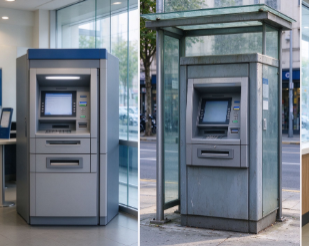
Modern ATMs are classified across three practical dimensions: function, deployment location and authentication method. Understanding these categories helps operators match the right machine to each site's requirements.
Common ATM Types β€” Function, Location, Authentication

πŸ“‹ By Function

πŸ’΅

Cash Dispensers

The original ATM form: withdraw-only terminals that dispense banknotes. Still widely deployed in low-traffic or cost-sensitive locations where deposit functionality is not required.

♻️

Cash Recyclers

Accept deposited banknotes, authenticate and sort them, then reuse them for subsequent withdrawals β€” dramatically reducing armored-car visits and idle cash float on busy sites.

🏦

Multi-Function Machines

Full-service terminals handling deposits, withdrawals, fund transfers, bill payments and account inquiries β€” the dominant format in bank branches and high-traffic retail locations.

πŸ“Ή

Video Teller Machines (VTMs)

Connect customers via live video to a remote human teller, enabling complex transactions β€” loan applications, account opening, foreign currency β€” beyond standard ATM capability.

πŸ“²

Self-Service Kiosks

Specialized terminals for e-wallet cash-in/out, prepaid mobile top-up, utility bill payment and ticket issuance β€” blurring the line between ATM and general financial kiosk.

πŸ“ By Location

πŸ›οΈ

On-Site Lobby Units

Installed within bank branches, offering the full range of services in a secure, supervised environment with direct access to branch staff when needed.

πŸ›’

Off-Site Retail Machines

Deployed in supermarkets, petrol stations, shopping malls and convenience stores β€” maximizing geographic coverage and transaction volume for independent deployers.

🧱

Through-the-Wall Terminals

Embedded in building facades with the service head facing outward β€” providing 24/7 outdoor access while keeping the cash module and mechanics secured inside the building.

πŸš—

Drive-Up ATMs

Designed for vehicle-based access, commonly found at US bank branches and fast-food-style banking lanes β€” offering convenience without requiring customers to leave their cars.

πŸ” By Authentication Method

πŸ’³

EMV Chip Contact

The global standard since the 2000s β€” physical chip card insertion with PIN verification. Dramatically reduces card-skimming fraud compared to magnetic stripe alone.

πŸ“‘

NFC Contactless Tap

Tap-to-withdraw using a contactless card, smartphone or smartwatch. Eliminates card insertion entirely, reducing mechanical wear and improving transaction speed.

πŸ“±

QR / Mobile-App Cardless

Customers initiate withdrawals via a banking app, then scan a QR code at the terminal β€” removing the physical card from the transaction entirely for maximum security.

πŸ‘οΈ

Biometric Recognition

Fingerprint, palm vein and facial recognition authentication on selected terminals β€” delivering the highest level of security and enabling cardless, PINless transactions.

ATM Type Feature Comparison

A quick-reference guide to help operators and deployers select the right ATM type for their specific site requirements, traffic volume and service objectives.

ATM Type Cash Dispense Cash Deposit Cash Recycling Video Teller Cardless Access Best For
πŸ’΅ Cash Dispenser βœ” ✘ ✘ ✘ ✘ Low-traffic, cost-sensitive sites
♻️ Cash Recycler βœ” βœ” βœ” ✘ Optional High-traffic branches & retail
🏦 Multi-Function βœ” βœ” Optional ✘ βœ” Bank branches, malls
πŸ“Ή VTM βœ” βœ” Optional βœ” βœ” Branch transformation
πŸ“² Self-Service Kiosk Optional Optional ✘ ✘ βœ” Bill pay, e-wallet, top-up

Future Trends Shaping the ATM Industry

The ATM is not a technology in decline β€” it is a technology in transformation. Here are the defining trends that will reshape the industry through 2030 and beyond.

Best Practices for ATM Operators

Whether managing a single terminal or a fleet of thousands, these operational best practices will help you maximize uptime, reduce costs and extend the productive life of your ATM infrastructure.

01
🎯 Match Function to Site Traffic
Conduct thorough site traffic analysis before selecting an ATM type. High-volume locations justify cash recyclers; low-traffic sites may only require basic dispensers. Overpaying for unused functionality erodes ROI.
02
πŸ”„ Standardize Platform Selection
Standardizing on fewer hardware platforms dramatically simplifies spare parts procurement, technician training, software management and service contracts β€” reducing operational complexity and total cost of ownership across your fleet.
03
πŸ“Š Track Wear-Prone Components
Proactively monitor the health of high-wear modules: card readers, cash dispensers, recyclers, encrypted PIN pads, receipt printers, power supplies and cassettes. Predictive replacement prevents costly unplanned downtime and customer service failures.
04
πŸ” Maintain Security Patch Compliance
Retire or upgrade any terminal that cannot receive current security patches. Running unsupported operating systems or firmware exposes your fleet β€” and your customers β€” to escalating fraud, skimming and logical attack risks that no physical security measure can fully offset.
05
☁️ Adopt Cloud Monitoring
Implement cloud-based fleet monitoring to gain real-time visibility into terminal status, cash levels, error codes and transaction performance. AI-driven analytics can predict failures days in advance, enabling proactive maintenance scheduling that minimizes customer-facing downtime.
06
🌱 Consider Refurbishment Pathways
Before retiring aging terminals, evaluate certified refurbishment options. Quality refurbished ATMs with upgraded security modules and current software can deliver 5–10 additional years of productive service at a fraction of new-unit capital cost β€” improving fleet economics and sustainability metrics.